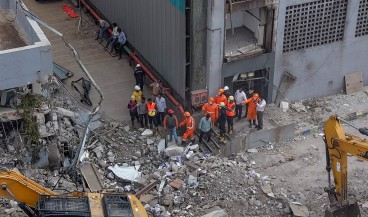
7.1-magnitude quake damages historic Kumamoto Castle under restoration
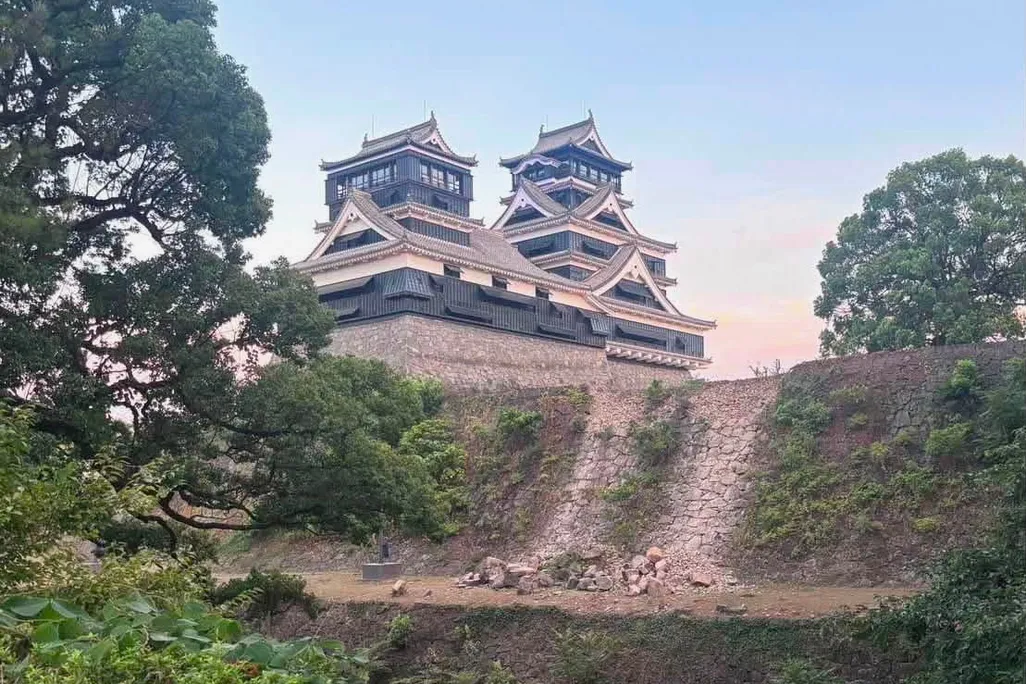
Kumamoto Castle, one of Japan's most iconic historic landmarks, has sustained new damage after a powerful magnitude 7.1 earthquake struck the southern island of Kyushu on 28 July. The castle was already undergoing a decades-long restoration following the destructive 2016 Kumamoto earthquakes.
The recent earthquake reached the highest level, 7, on Japan's seismic intensity scale in the cities of Uki and Hikawa. By 31 July, the disaster had claimed 36 lives, forced thousands of residents to evacuate despite intense summer temperatures, and caused extensive damage to roads, buildings, and other infrastructure throughout Kumamoto Prefecture.
Originally completed in 1607 by feudal lord Kato Kiyomasa on the site of earlier 15th-century fortifications, Kumamoto Castle is regarded as one of Japan's finest surviving castles. Over the years, it has become a powerful symbol of the city's resilience and recovery following the twin earthquakes of 2016, which killed more than 275 people and caused severe damage to the castle, including the collapse of two major stone walls.
Castle officials have confirmed that the latest earthquake caused additional structural damage, including the collapse of sections of the stone walls and minor damage to several buildings within the castle grounds. The site remains closed while engineers conduct detailed safety inspections. Restoration work from the 2016 disaster was already expected to continue until 2052, and the new damage may further extend that timeline.
Rintaro Mitsuyasu of the Kumamoto Castle General Office said that inspections are still ongoing, making it too early to determine how the restoration schedule will be affected. Although delays are possible, officials cannot yet estimate how significant they may be.
The earthquake also affected other cultural heritage sites across Kumamoto Prefecture. Television footage broadcast by NHK showed the collapse of a gate at Yatsushiro Shrine, home to the Yatsushiro Myoken Festival, which is recognized by UNESCO as Intangible Cultural Heritage.
The region's museums and cultural institutions were also impacted. According to the Japanese art magazine Bijutsu Techo, at least 16 museums, galleries, and cultural facilities temporarily closed to inspect their buildings and collections. These included the Contemporary Art Museum Kumamoto, the Kumamoto Prefectural Museum of Art, the Kumamoto City Museum, and the Tsunagi Art Museum.
The Contemporary Art Museum Kumamoto reported that its collection escaped major damage. Although movable exhibition walls shifted during the earthquake, causing dust and paint fragments to fall onto several artworks, museum staff believe the affected pieces can be successfully cleaned and conserved.
Deputy director Akiko Sakamoto said there was no significant damage to either the museum's permanent collection or its exhibited works. She expressed confidence that routine conservation treatments, such as cleaning, would be sufficient to restore the affected artworks.
Drawing on lessons learned from the 2016 earthquakes, the museum has decided not to wait until every inspection is complete before reopening. Instead, it plans to reopen its free public spaces first, followed by a gradual reopening of its exhibition galleries, including the current exhibition dedicated to the Japanese fashion brand minä perhonen.
Sakamoto explained that the museum's experience a decade ago influenced this approach. She noted that, after the 2016 disaster, the institution delayed reopening, whereas this time staff recognized the importance of restoring a gathering place for the community as soon as it is safe to do so.
Officials expect museums in Kumamoto City to resume operations relatively soon, while institutions located in the more severely affected southern municipalities, including Uki and Yatsushiro, may remain closed for a longer period.
For Kumamoto Castle, however, the immediate priority is to complete a thorough assessment of the new earthquake damage before restoration work can continue. Despite the setback, officials remain hopeful that visitors from Japan and abroad will return once the castle reopens and once again experience its rich history and cultural significance.
Sources: theartnewspaper.com, smithsonianmag.com
Media
- Part of the stone wall of Kumamoto Castle collapses as 7.1 earthquake hits Japan
- Earthquake Causes Huge Dust Clouds to Rise From Beneath Japan’s Kumamoto Castle
Want to read more like this story?

The largest tunnel boring machine (TBM) in the world finished drilling underneath Seattle
Jun, 22, 2017 | NewsThe tunnel will become a double-decker highway, scheduled to open in 2019 It was in April of...

4.1 magnitude earthquake in Nice, France raises concerns among authorities
Mar, 18, 2025 | NewsOn Tuesday, March 18, a 4.1-magnitude earthquake struck Nice, France, at approximately 6:45 p.m. lo...

The tallest structure in Indiana: 1,132 feet tall
Jul, 20, 2023 | NewsCities and nations have engaged in a competitive race, vying to outdo one another by constructing m...

The first building in Toronto, Canada to exceed 100 storeys.
Nov, 08, 2022 | NewsToronto is in the midst of a historic skyscraper race, as two developments duke it out for the titl...

Europe's 'longest bridge' which cost £746.5m to build
Oct, 06, 2024 | NewsThe Vasco da Gama Bridge, located in Lisbon, Portugal, is the longest bridge in Europe. Its length...

Sinkholes Found Near Lotte World Tower
Aug, 01, 2014 | NewsFive years into construction on the Lotte World Tower, the developers of the skyscraper have receive...

World’s Tallest Residential Building Under Construction
Feb, 06, 2014 | NewsConstruction is currently reaching over 600 feet on the 432 Park Avenue residential building in New...
Structural design for Phase 2 of the Gurugram Metro stations begin
Oct, 24, 2025 | NewsThe structural design work for Phase 2 of the Gurugram Metro project is presently in progress under...

Spectacular interchanges around the world
Jun, 20, 2018 | NewsCheck these engineering marvels, built to provide solutions to chronic traffic congestion problems...
Trending

Building walls with demolition waste - the poetry of Cyclopean concrete


Revolutionary glass bridge exhibit at the Corning Museum of Glass

SkyCiv Engineering release new Mobile App


Three-storey building collapses in Benetússer after residents flee warning signs
Apartment building collapse in Athens (Greece) sparks concern over excavation safety