US Senate proposes $20 million to expand mass timber construction and accelerate housing development
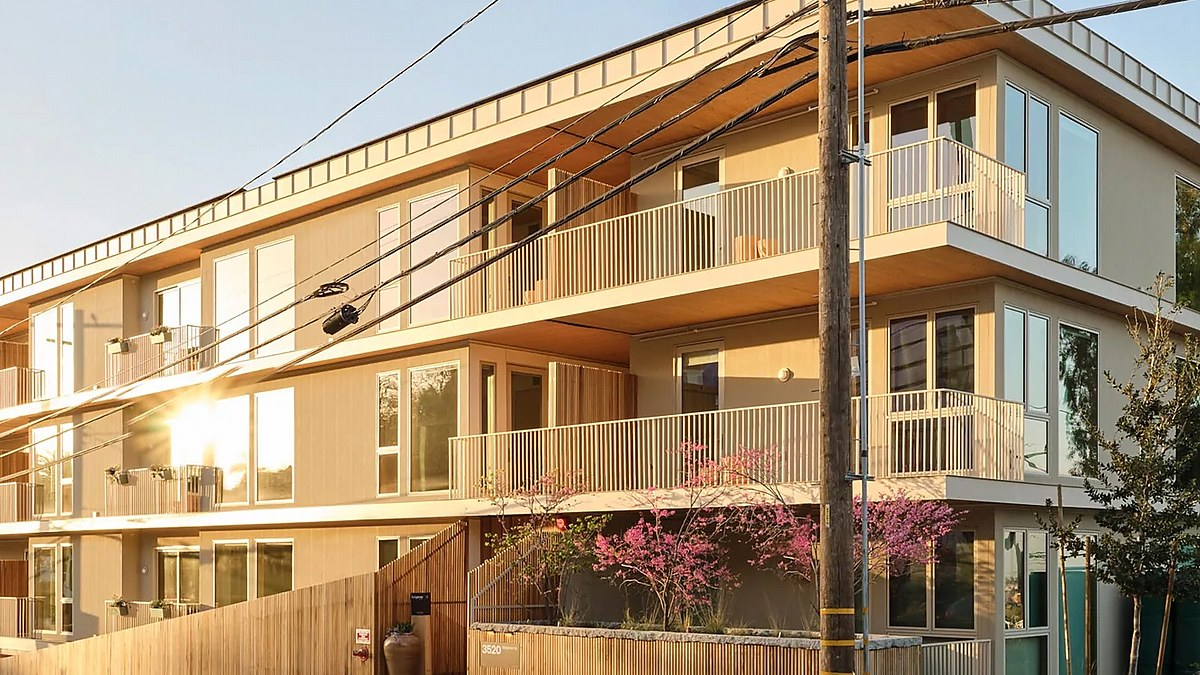
The American Wood Council (AWC) received a proposal by the US Senate Appropriations Committee to allocate $20 million towards expanding mass timber construction, supporting housing development and helping states update their building codes. Specifically, this initiative aims to encourage the use of engineered wood products in residential construction while reducing regulatory obstacles that have limited their wider adoption.
According to AWC President and CEO Jackson Morrill, mass timber offers a practical way to address the growing demand for housing in the United States. He noted that the material is already recognized by building codes and can help shorten construction schedules while supporting domestic manufacturers and the construction workforce.
Under the program, developers could receive incentives of up to $20,000 per housing unit. Priority would be given to timber-producing regions where mass timber construction remains relatively uncommon, as well as areas located near existing manufacturing facilities. It should be noted that up to $1 million of this funding would be used to develop technical and educational resources for architects, structural engineers, developers and construction professionals.
The remaining $5 million would be provided through HUD's PRO Housing program to help state and local authorities update building regulations, simplify approval procedures and expand workforce training. The funding would also support efforts to streamline permitting for mass timber manufacturing facilities.
The wider appropriations proposal includes $3.3 billion for the Community Development Block Grant program and $1.4 billion for Economic Development Initiative projects, which support housing improvements, infrastructure and community development.
According to research referenced in the Senate's appropriations proposal, mass timber projects can achieve construction schedules approximately 15–25% shorter than those using conventional construction methods.
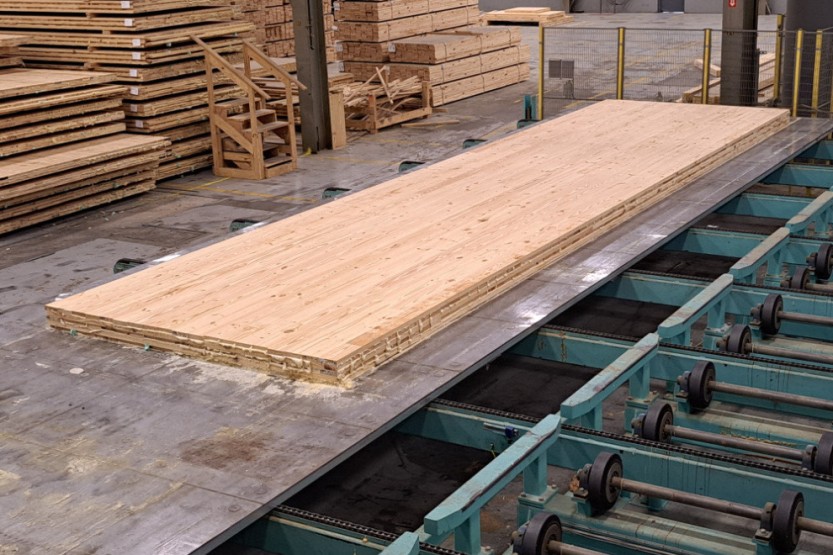
Generally, mass timber systems is consisted of large, engineered wood elements, including cross-laminated timber (CLT) panels and glued-laminated timber (glulam) beams and columns. These structural components are manufactured under controlled factory conditions before being transported to site for assembly.
The 2021 International Building Code (IBC) introduced provisions allowing taller mass timber buildings, with further updates included in the 2024 edition. However, several jurisdictions continue to operate under older regulations, meaning some projects require additional technical assessments or special approvals before construction can proceed.
Moreover, the wider adoption of mass timber could create new opportunities in residential, commercial and institutional construction, particularly for contractors working on structural and interior building systems.
However, although timber is used as the primary structural material, these buildings still require many conventional construction components, including internal partitions, gypsum board, insulation, acoustic treatments and fire-resistant assemblies.
Fire safety remains an important consideration in mass timber design. Depending on the building's structural configuration, exposed timber surfaces, concealed connections and hybrid systems combining timber, steel and concrete must satisfy the applicable fire-resistance requirements. In addition, acoustic performance is another important design consideration, especially in multifamily residential buildings, offices and educational facilities. Appropriate floor, wall and ceiling assemblies are needed to meet sound insulation requirements.
Furthermore, mass timber projects may also require closer coordination between structural engineers, architects and specialist contractors. Since many structural elements are prefabricated, connection details, building services and internal installations often need to be resolved earlier in the design process.
The proposed federal investment could help remove some of the regulatory and practical barriers currently affecting mass timber construction in the United States. Therefore, more consistent building codes will improve technical guidance and greater access to training that eventually could encourage developers to consider engineered timber systems for projects.
Sources: buildingenclosureonline.com, woodcentral.com.au, lesprom.com
Want to read more like this story?

Spectacular interchanges around the world
Jun, 20, 2018 | NewsCheck these engineering marvels, built to provide solutions to chronic traffic congestion problems...

Cairo, Egypt: Building collapse caused 6 casualties while 7 others were injured
Oct, 13, 2026 | NewsOn Tuesday October 13, a five-storey building collapsed in Cairo's Hadayek El-Qobba district, killin...

New AI system identifies multiple defects in concrete bridges using photographs
Nov, 06, 2026 | NewsA major matter for the engineers is that inspecting concrete bridges is not always straightforward,...

Kyrgyzstan plans record-breaking glass suspension bridge in Ala-Archa National Park
Nov, 05, 2026 | NewsA new project is about to begin in Kyrgyzstan that could set a new world record and become a major a...

China: Hangzhou Bay cross-sea railway bridge reaches major construction milestone
Oct, 23, 2026 | NewsThe southern navigation channel bridge of the Hangzhou Bay Cross-Sea Railway Bridge reached a major...

Severe storms and possible tornadoes cause widespread damage across North Carolina
Oct, 15, 2026 | NewsSevere thunderstorms and possible tornadoes swept through central North Carolina on Sunday, knocking...
MIT engineers test new fabric-cast concrete beams that require less concrete
Nov, 18, 2026 | NewsEngineers at the Massachusetts Institute of Technology (MIT) have tested a different way of producin...

SDC Verifier 2026 R2 Expands Structural Verification for Offshore, Marine, and Complex Engineering Projects
Sep, 16, 2026 | NewsSDC Verifier 2026 R2 expands structural verification with new offshore and marine standards, multiax...

Shipyard Crane Fatigue Analysis with FEA and SDC Verifier
Oct, 08, 2026 | NewsWhere the crane details were exposed to variable-amplitude loading, SDC Verifier used the Palmgren-M...
Trending
Glass cafe at 2,600 feet in the air: it opens on world's tallest bridge
Western Australia: Construction of the tallest wind turbines is underway

The Leaning Tower of Pisa: Ingenious design and ongoing stability efforts

Newcastle’s tallest building reaches its final height

Complex underground tunnel in Manhattan: The Grand Central–42nd street connection
Western Australia: Construction of the tallest wind turbines is underway

5.9 magnitude earthquake rattled Indonesia; No fatalities or injured were reported