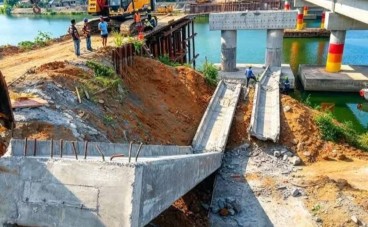
Low-carbon cement gains ground as construction industry seeks to reduce emissions
It is well known that the construction industry is under pressure in order to reduce its carbon footprint. It should be noted that cement production is accounted for approximately 8% of global CO₂ emissions with China alone to be expected to produce around 2 billion metric tons of cement this year, compared with 490 million tons in India.
A new study that was presented suggested that one promising solution is the blended cement, which replaces part of the conventional Portland cement clinker with alternative materials that require less energy to produce. Specifically, new research that was presented at COP31 suggests that increasing the proportion of alternative materials in cement by 20 percentage points could reduce annual global CO₂ emissions by nearly 2%.
As of present, several countries and regional authorities have already introduced requirements for construction materials with lower embodied carbon. In the United States, nine states, including New York, have adopted policies promoting lower-carbon concrete in public projects.
According to Diana Casey, cement and ESG director at the Global Cement and Concrete Association (GCCA), government demand could encourage manufacturers to expand production and invest in alternative cement technologies. Also, she added that blended cement could also reduce costs in developing countries by replacing imported clinker with locally available materials, such as calcined clay.
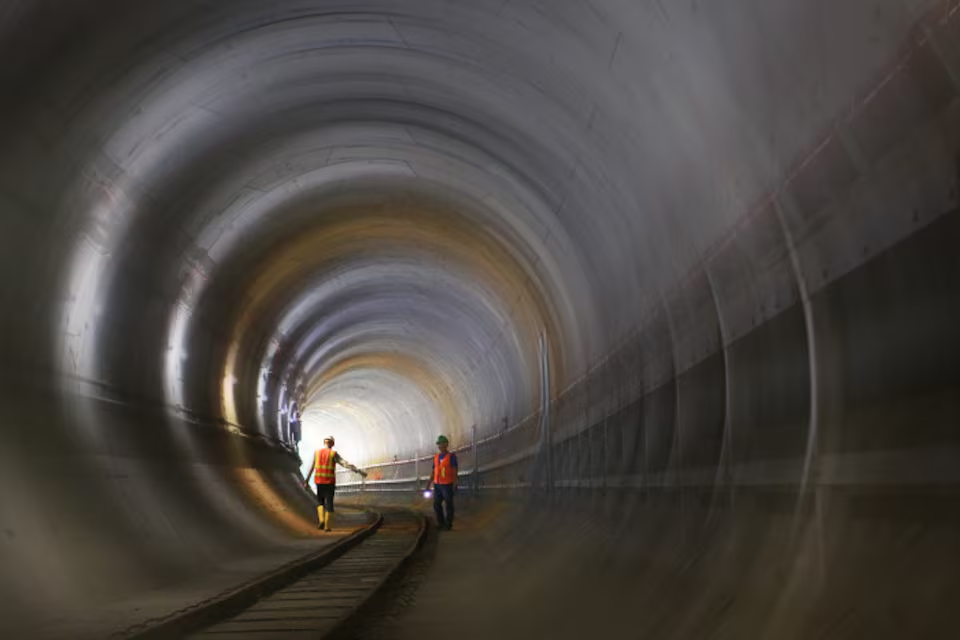
Arup which is an engineering consultancy firm has already used calcined clay in concrete for a tunnel on the UK's High Speed 2 (HS2) railway project. The clay was recovered from excavation material at the construction site, reducing the need for additional raw material extraction.
Calcined clay is becoming an important supplementary cementitious material (SCM), particularly as supplies of traditional alternatives, such as fly ash and ground granulated blast-furnace slag (GGBS), become less reliable. However, although calcined clay is produced at lower temperatures than conventional cement clinker, its manufacture still requires heating and generates emissions. Therefore, researchers are exploring alternative production methods.
One approach is mechanical activation, which uses intensive grinding to improve the reactivity of materials such as clay and industrial by-products. In some cement formulations, mechanically activated materials can replace up to 50% of ordinary Portland cement.
UK-based Material Evolution has developed another process using alkali fusion to activate alternative cementitious materials without conventional high-temperature clinker production. According to the company, its technology can replace up to 95% of Portland cement in certain mixtures, reducing carbon emissions by approximately 80%. The process also aims to address a common limitation of blended cement: slower early-age strength development, which can delay construction activities. In addition, recycling construction waste offers another opportunity to reduce cement consumption.
Arup is investigating urban mining, which involves recovering materials from demolished buildings for use in new construction. Grinding waste concrete into fine particles can produce material suitable for partial cement replacement, rather than using the recycled concrete solely as aggregate.
Meanwhile, Canadian company CarbonCure Technologies is expanding the use of carbon mineralisation. Its process injects captured CO₂ into fresh concrete, where it reacts with cementitious compounds and becomes permanently stored as mineral carbonates. In addition, the company recently reported delivering its 11 millionth truckload of concrete produced using the technology. According to CarbonCure's chief executive, Yuliya Kravtsov, demand for lower-carbon construction materials is increasing, supported by public procurement policies and major private developments, particularly data centres and logistics facilities.
Despite technological advances, regulatory requirements remain a significant obstacle to the wider adoption of alternative cements. While new formulations must meet established safety, strength and durability requirements, lengthy approval procedures can delay their introduction to the market.
The European Union Emissions Trading System is also encouraging manufacturers to reduce emissions by increasing the cost of carbon-intensive production. From 2031, eligibility for certain free emissions allowances is expected to be linked to credible decarbonisation plans and investment in emissions reduction.
Moreover, artificial intelligence is also helping accelerate cement development. At its innovation centre in Lyon, France, Holcim is using its OptiCEM AI system to assess cement mixtures and additives. According to the company, evaluations that previously required up to 28 days can now be completed in minutes.
Although much of the research and testing is concentrated in developed countries, interest in blended cement is expanding internationally. Countries including Cambodia, Ethiopia, Ghana, Tanzania and Uganda have joined efforts to promote lower-carbon cement, partly because locally sourced materials can reduce both emissions and production costs.
As global construction demand continues to grow, alternative cement technologies could play an important role in reducing embodied carbon. Their wider adoption, however, will depend on consistent structural performance, competitive costs, updated technical standards and stronger demand from public and private construction projects.
Sources: reuters.com, thenews.pk
Want to read more like this story?

Spectacular interchanges around the world
Jun, 20, 2018 | NewsCheck these engineering marvels, built to provide solutions to chronic traffic congestion problems...

Cairo, Egypt: Building collapse caused 6 casualties while 7 others were injured
Oct, 13, 2026 | NewsOn Tuesday October 13, a five-storey building collapsed in Cairo's Hadayek El-Qobba district, killin...

China: Hangzhou Bay cross-sea railway bridge reaches major construction milestone
Oct, 23, 2026 | NewsThe southern navigation channel bridge of the Hangzhou Bay Cross-Sea Railway Bridge reached a major...

SDC Verifier 2026 R2 Expands Structural Verification for Offshore, Marine, and Complex Engineering Projects
Sep, 16, 2026 | NewsSDC Verifier 2026 R2 expands structural verification with new offshore and marine standards, multiax...
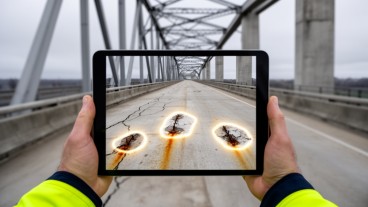
New AI system identifies multiple defects in concrete bridges using photographs
Nov, 06, 2026 | NewsA major matter for the engineers is that inspecting concrete bridges is not always straightforward,...
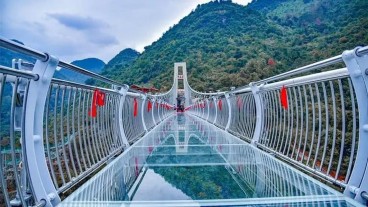
Kyrgyzstan plans record-breaking glass suspension bridge in Ala-Archa National Park
Nov, 05, 2026 | NewsA new project is about to begin in Kyrgyzstan that could set a new world record and become a major a...

Shipyard Crane Fatigue Analysis with FEA and SDC Verifier
Oct, 08, 2026 | NewsWhere the crane details were exposed to variable-amplitude loading, SDC Verifier used the Palmgren-M...
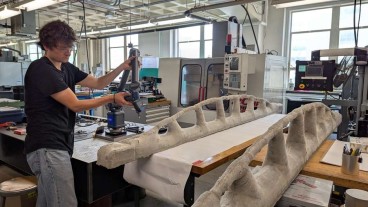
MIT engineers test new fabric-cast concrete beams that require less concrete
Nov, 18, 2026 | NewsEngineers at the Massachusetts Institute of Technology (MIT) have tested a different way of producin...

Severe storms and possible tornadoes cause widespread damage across North Carolina
Oct, 15, 2026 | NewsSevere thunderstorms and possible tornadoes swept through central North Carolina on Sunday, knocking...
Trending
Glass cafe at 2,600 feet in the air: it opens on world's tallest bridge
Western Australia: Construction of the tallest wind turbines is underway

The Leaning Tower of Pisa: Ingenious design and ongoing stability efforts

The five tallest skyscrapers to be completed in 2023

Western Australia: Construction of the tallest wind turbines is underway

5.9 magnitude earthquake rattled Indonesia; No fatalities or injured were reported