UK: New 3D printing technology for steel repairs could extend the lifespan of ageing bridges and reduce carbon emissions
- Nov, 28, 2026
- Bridge Management Bridge Design Bridges Damage (Structural) Structural Failures Structural Design Load Factors Structure Reinforcement Structural Systems Decks Trusses Metal Structures Steel Structures Fatigue Other Structural Repair And Retrofit Of Structures News On Projects / Industry Other News
- United Kingdom
- Authored by: thestructuralengineer.info

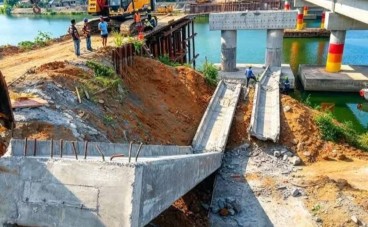
Thousands of steel bridges across the UK have been in service for decades, and many are now carrying traffic loads that their original designers could not have anticipated. Keeping these structures safe is becoming increasingly difficult as they age, particularly when corrosion, fatigue and other forms of deterioration begin to affect their structural performance. The Royal Academy of Engineering recently warned that parts of the country's ageing infrastructure are approaching a critical condition, making timely maintenance and repair increasingly important.
Replacing deteriorated steel components is not always the best solution. Apart from the cost and disruption involved, manufacturing new steel requires considerable energy and produces carbon emissions, even when lower-carbon production methods are used.
An estimated 300 million tons of iron and steel are currently contained in buildings and transport infrastructure across the UK. If repairs could extend the service life of just 1% of this stock, around 3 million tons of new steel production could be avoided. In terms of steel production through electric arc furnaces, researchers suggest that this could prevent approximately 2.1 million tons of CO₂-equivalent emissions. This action will have as a result reduced energy consumption by around 8.2 terawatt-hours.
Therefore, they examine one possible alternative to conventional steel repairs to be additive manufacturing as 3D printing. Specifically, researchers are examining whether it can be used to restore damaged structural elements without having to replace large sections of steel. With this method they will add new metal directly to the affected areas, rather than replacing entire components or strengthening them with additional steel plates. Therefore, this will be a great solution for bridges with localized deterioration, because will be offer a more targeted approach to maintenance and repair.
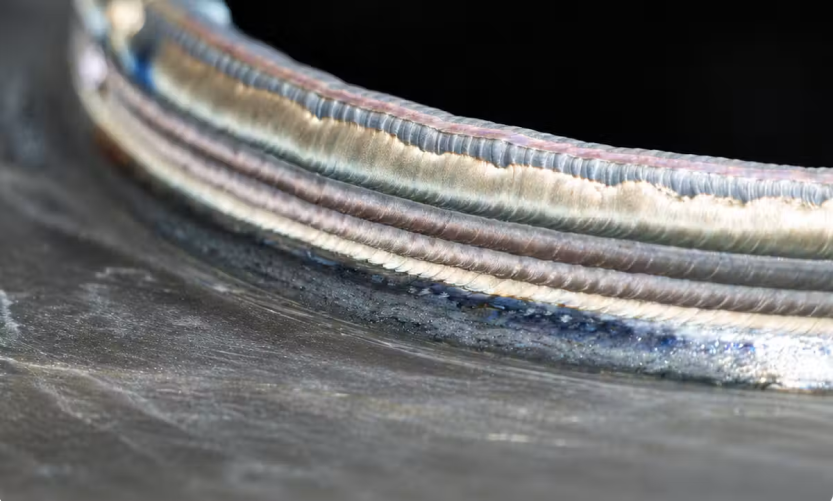
In addition, among the techniques being studied for this matter, wire-fed laser-directed energy deposition (DED) was one of them. With this process, they will use a metal wire that will continuously be supplied to a laser beam. Thus, the laser beam will be melting both the wire and a thin layer of the existing steel. As the molten metal cools and solidifies, it bonds to the original surface. By repeating this process, layer after layer, the damaged section can be gradually restored.
However, although the technique shares similarities with conventional weld cladding, the use of a laser provides greater control over the repair process and reduces the amount of heat transferred to the surrounding steel. For bridges, this could allow engineers to carry out local repairs with less material and potentially shorter closures. However, there are still questions about how repaired components would perform over decades of service.
It should be mentioned that fatigue is one of the main concerns. Every time a vehicle crosses a steel bridge, the structure experiences changes in loading. Over millions of cycles, these repeated stresses can cause existing cracks to grow, even when the applied loads remain within normal operating limits.
Moreover, laboratory studies have produced encouraging findings. Specifically, in one investigation, a related wire-arc deposition method prevented existing fatigue cracks from propagating for more than nine million loading cycles. By comparison, unrepaired specimens failed after approximately 950,000 cycles. However, these results cannot necessarily be applied directly to older bridges. Most experiments have been carried out on relatively small specimens made from modern steel, while many existing bridges contain materials manufactured decades or even a century ago.
Differences in steel composition, accumulated damage and manufacturing methods could influence the effectiveness of the repairs. The heating and cooling involved in laser deposition may also change the microstructure of the steel around the repaired area. Further research will be needed to establish how the new material behaves alongside the original steel and whether the repair can provide a reliable extension of the structure's remaining service life.
Also, a recent study examining bridge rehabilitation using ultra-high-performance fibre-reinforced concrete (UHPFRC) estimated potential savings of 1.7 million tonnes of CO₂-equivalent emissions across 800 bridges. Across Switzerland's federal network of 3,903 bridges, the estimated savings reached 7.7 million tonnes.
The study also found that targeted rehabilitation could produce 84–93% fewer emissions than replacing existing structures. These estimates did not include the additional emissions associated with traffic diversions during construction.
This is especially relevant to Britain's railway network, which contains approximately 16,000 metallic bridges. According to a survey conducted in 2004, around 80% were already more than 50 years old, and half had exceeded 100 years of service.
Therefore, replacing or extensively repairing these bridges can require railway closures, temporary restrictions and significant disruption to passengers and freight services. Localized repair methods could help reduce some of these difficulties, provided they can be shown to meet the necessary safety requirements.
While laser-based additive manufacturing is not yet an established repair method for ageing steel bridges, research suggests that it could eventually become a useful addition to conventional strengthening and rehabilitation techniques. However, the potential applications are not limited to bridges. Offshore wind turbines, industrial facilities and other large steel structures often operate in environments where corrosion and fatigue are difficult to avoid, and replacing damaged components can be particularly expensive.
In all, if those challenges can be addressed, repairing existing steel more precisely could reduce the need for replacement materials while helping ageing infrastructure remain in service for longer.
Sources: theconversation.com, tolerance.ca, uk.news.yahoo.com
Want to read more like this story?

Spectacular interchanges around the world
Jun, 20, 2018 | NewsCheck these engineering marvels, built to provide solutions to chronic traffic congestion problems...

Cairo, Egypt: Building collapse caused 6 casualties while 7 others were injured
Oct, 13, 2026 | NewsOn Tuesday October 13, a five-storey building collapsed in Cairo's Hadayek El-Qobba district, killin...

China: Hangzhou Bay cross-sea railway bridge reaches major construction milestone
Oct, 23, 2026 | NewsThe southern navigation channel bridge of the Hangzhou Bay Cross-Sea Railway Bridge reached a major...

SDC Verifier 2026 R2 Expands Structural Verification for Offshore, Marine, and Complex Engineering Projects
Sep, 16, 2026 | NewsSDC Verifier 2026 R2 expands structural verification with new offshore and marine standards, multiax...

Shipyard Crane Fatigue Analysis with FEA and SDC Verifier
Oct, 08, 2026 | NewsWhere the crane details were exposed to variable-amplitude loading, SDC Verifier used the Palmgren-M...
Kyrgyzstan plans record-breaking glass suspension bridge in Ala-Archa National Park
Nov, 05, 2026 | NewsA new project is about to begin in Kyrgyzstan that could set a new world record and become a major a...
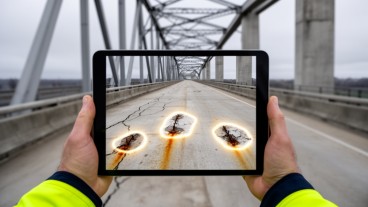
New AI system identifies multiple defects in concrete bridges using photographs
Nov, 06, 2026 | NewsA major matter for the engineers is that inspecting concrete bridges is not always straightforward,...
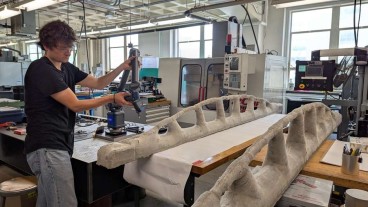
MIT engineers test new fabric-cast concrete beams that require less concrete
Nov, 18, 2026 | NewsEngineers at the Massachusetts Institute of Technology (MIT) have tested a different way of producin...

Severe storms and possible tornadoes cause widespread damage across North Carolina
Oct, 15, 2026 | NewsSevere thunderstorms and possible tornadoes swept through central North Carolina on Sunday, knocking...
Trending
Glass cafe at 2,600 feet in the air: it opens on world's tallest bridge
Western Australia: Construction of the tallest wind turbines is underway


The Leaning Tower of Pisa: Ingenious design and ongoing stability efforts

Western Australia: Construction of the tallest wind turbines is underway

5.9 magnitude earthquake rattled Indonesia; No fatalities or injured were reported