Why earthquake-prone Greece is now considering nuclear power
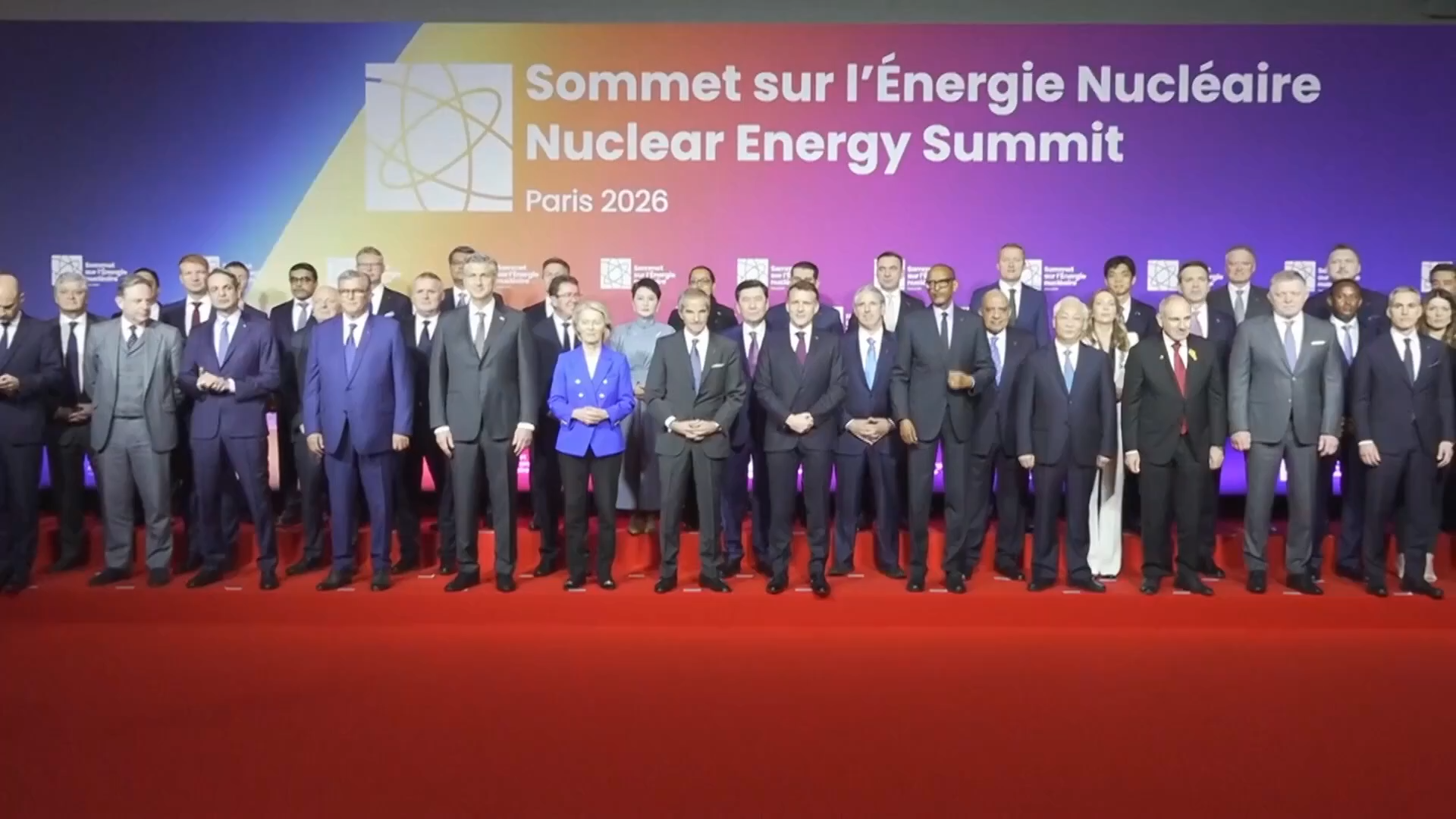
The Deon Policy Institute argues that developing nuclear power in Greece could strengthen the country’s energy, economic, and climate security. Reflecting growing concerns about energy supply and greenhouse gas emissions, the Greek government has recently reopened discussions on whether nuclear energy should become part of the national energy mix—an idea that would have faced strong opposition just a few years ago.
Across the European Union, nuclear power already plays a significant role since twelve member states operate nuclear reactors, including France, Finland, Sweden, Romania, and Czech Republic. According to data from Eurostat, nuclear plants generated 23.3% of the EU’s electricity in 2024, a 4.8% increase compared with 2023.
Nuclear physicist George Laskaris, president of the Deon Policy Institute, has studied the potential for small nuclear reactors in Greece and he argues that nuclear energy is essential for three key reasons: energy security, economic stability, and climate protection. Because nuclear plants produce large amounts of electricity within a very small area and emit minimal greenhouse gases, he considers them an effective low-carbon energy source.
Furthermore, Laskaris stresses that nuclear power could reduce Greece’s heavy dependence on imported energy. Currently, the country imports around 80% of its energy, mainly oil and natural gas, making it vulnerable to geopolitical tensions and supply disruptions. Developing domestic nuclear capacity, he argues, would improve energy independence.
From an economic perspective, stable energy prices are another advantage. Since nuclear fuel is purchased at predictable costs and reactors operate for decades, nuclear power can help stabilize electricity prices for both industry and households, especially during periods of global energy volatility.
However, concerns about safety remain a major issue in Greece, particularly because the country is earthquake prone. However, Laskaris notes that reactor technology has evolved significantly. Early reactors developed in the 1950s were largely experimental, while later generations introduced improved safety systems. Modern reactors include passive safety mechanisms that can automatically shut down the reactor without human intervention, and advanced monitoring technologies, including artificial intelligence, further enhance safety. He also believes that attitudes toward nuclear power are gradually shifting. Even some environmental organizations that once opposed nuclear energy now acknowledge its potential role as a low-carbon energy source, provided strict safety conditions are met.
Sources: euronews.com, ca.news.yahoo.com, leadstory.com
Want to read more like this story?

Plans for mini nuclear reactors in UK by Rolls-Royce
Feb, 05, 2020 | NewsRolls-Royce plans to construct 15 mini nuclear reactors in the UK in the forthcoming years. Small...

Renewable energy thrives during COVID-19 lockdown in Europe
Apr, 10, 2020 | NewsCOVID-19 has highly affected electricity demand globally. When it comes to Europe, new data show th...

4 revolutionary energy storage solutions for sustainable constructions
Aug, 27, 2024 | NewsOne critical problem that scientists are facing and trying to solve is the inability to store and t...

Japan Begins Building Ice Wall at Fukushima Nuclear Plant
Jun, 05, 2014 | NewsConstruction is underway on a 1.5-kilometer long ice wall surrounding the Fukushima Nuclear Plant in...

EU regulations on energy performance of buildings to be revised
Jul, 08, 2016 | NewsNowadays, all buildings are rated for energy consumption and specific legislation in the EU aims to...

The prospects for carbon-neutral buildings
Oct, 27, 2023 | NewsIn the United Kingdom, buildings account for 33% of greenhouse gas emissions and 40% of global ener...

The Building Material Of The Device Of ITER
Jul, 15, 2015 | NewsAt the construction site of the International Thermonuclear Experimental Reactor, known as ITER in s...

Novel technology by the designer of Burj Khalifa will convert gravity to electricity
Jun, 05, 2024 | NewsThe company (SOM) that designed Burj Khalifa announced their plans to build skyscrapers that could...

Keller Seismic Knowledge Lecture Series: Seismic Stability
Apr, 18, 2023 | EventThe Keller Seismic Knowledge Lecture Series is devoted to curiosity and innovation! Six experts. Si...
Trending


4.1 magnitude earthquake in Nice, France raises concerns among authorities

The first building in Toronto, Canada to exceed 100 storeys.

The tallest structure in Indiana: 1,132 feet tall

Sinkholes Found Near Lotte World Tower
Three-storey building collapses in Benetússer after residents flee warning signs
World Bank estimates Venezuela's earthquake losses at $19.6 Billion