Modular timber building system shows exceptional earthquake resistance in full-scale University of Auckland testing
- Jun, 03, 2026
- Wood Structures Sustainable Development Performance-Based Design Structural Design Earthquake Engineering Seismic Effects Damage (Structural) Other Structural News On Research / Academia News On Products & Services Other News
- New Zealand, Auckland
- Authored by: thestructuralengineer.info
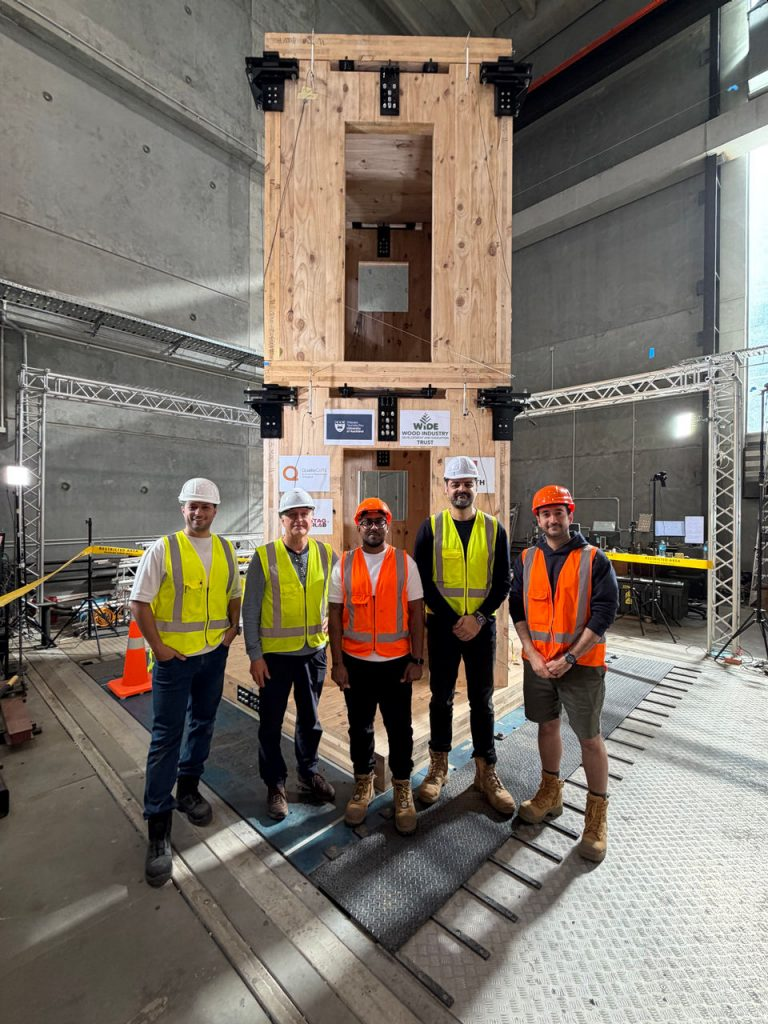
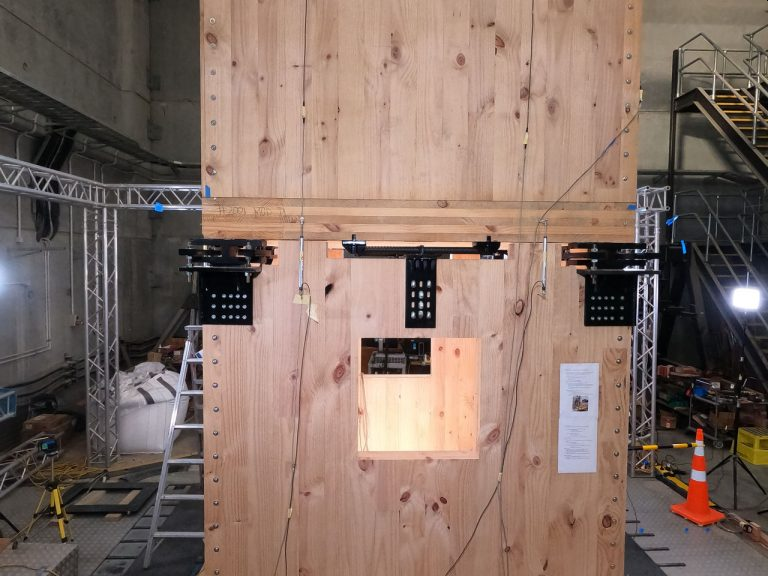
A full-scale earthquake simulation carried out at the University of Auckland has shown that a newly developed modular timber building system can withstand major seismic loading, drawing strong interest from about 60 industry professionals.
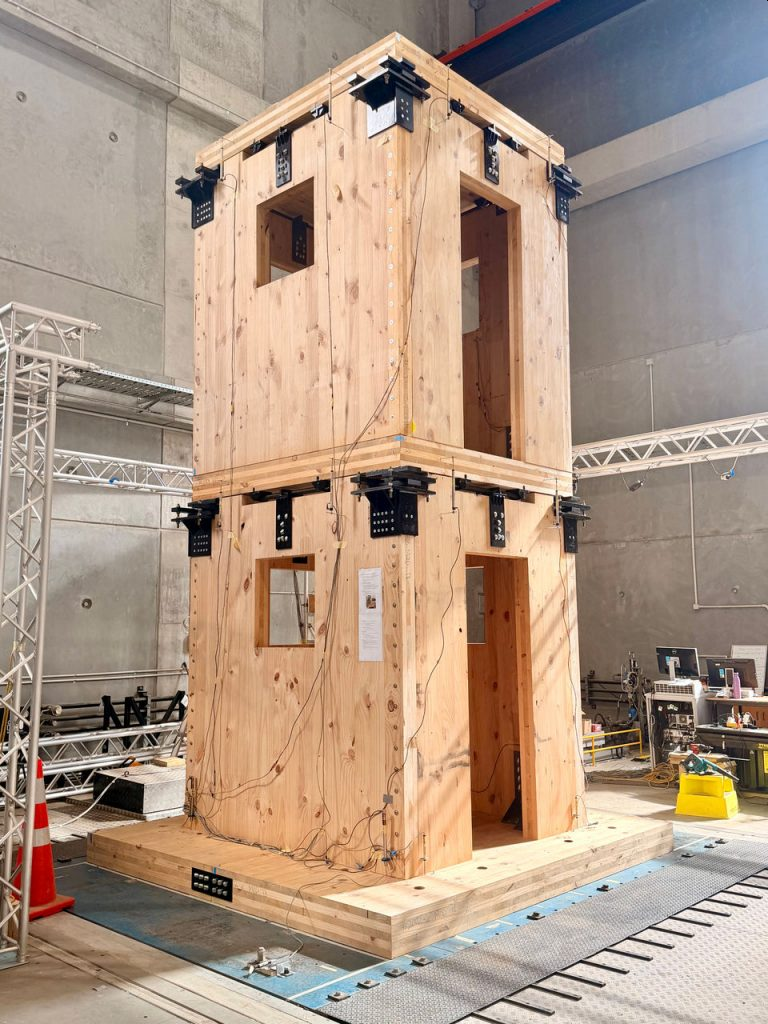
The study was led by Dr Ashkan Hashemi and Professor Pierre Quenneville, together with PhD student Rajnil Lal. The team tested a two-storey structure made from cross-laminated timber (CLT), a type of engineered wood increasingly used in modern construction because of its low-carbon profile and fast assembly benefits.
Although timber is becoming more common in modern architecture and construction, there is still limited full-scale evidence on how large timber buildings behave during major earthquakes. To help address this knowledge gap, the researchers developed a seismic system using prefabricated modules linked by resilient connections between floors and walls. These connections are designed to allow the building to move in a controlled way during an earthquake, reducing damaging forces and helping the structure return to its original position after shaking stops.
Dr Hashemi said the findings could significantly influence the future of modular construction. Modular buildings, with components fabricated off-site and assembled on-site, are expected to play an increasing role in the construction industry. However, New Zealand’s high earthquake demands have made their wider use more challenging. The new system aims to address this issue by combining modular construction with improved seismic performance.
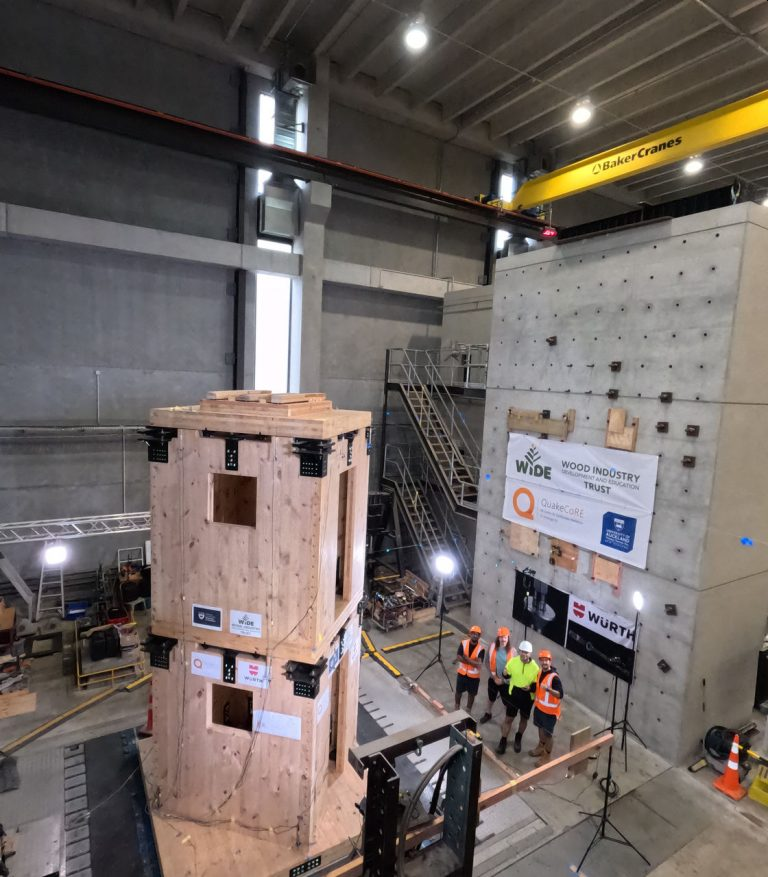
The test structure represented medium-density townhouses and apartments commonly being built across New Zealand. Although it was built as a two-storey building, extra weight equivalent to a third storey was added to better reflect real-world conditions. The experiments were conducted at the University’s Structures Test Hall in Newmarket, one of the few facilities capable of shaking a full-size building using realistic earthquake motions.
Over several weeks, the team subjected the building to multiple earthquake simulations based on real seismic records. These included both horizontal shaking and twisting motions to capture the complex forces buildings can experience during major earthquakes. Despite the demanding testing programme, the structure remained stable, and inspections found no damage to its main timber elements.
Industry visitors who attended an open demonstration were impressed by the results. According to the University of Auckland, many attendees were surprised that the building withstood around 100 strong shakes without structural damage, as they were not used to seeing a building sustain even one major earthquake-level event without significant harm.
The researchers believe the approach could support future applications in modular housing, mid-rise commercial buildings, schools, healthcare facilities and rapid-build projects. Beyond improving seismic resilience, the system could also offer environmental advantages by reducing carbon emissions and construction waste.
The project received support from the Wood Industry Development and Education (WIDE) Trust, Te Hiranga Rū QuakeCoRE and sponsors from the timber construction sector. The WIDE Trust continues to fund research at the University of Auckland focused on timber design, architecture and sustainable forestry projects.
Sources: preventionweb.net, auckland.ac.nz
Image Gallery
Media
- Modular cross‑laminated timber building proves it can withstand 100 full-scale shakes.
Want to read more like this story?
Earthquake Engineering
Jan, 01, 2019 | EducationEarthquake engineering is a critical field of civil engineering that focuses on the analysis, desi...

Innovative strategies in earthquake-resistant building design: ensuring safety and structural integrity
Jul, 16, 2024 | NewsThe major concern that engineers and architects have when they design a new building is to ensure t...

Experts answer: “Why did so many buildings collapse in Turkey?”
Feb, 06, 2023 | NewsFollowing Monday's terrible earthquakes, many of people are reportedly still trapped in the rubble...

Messina earthquake (1908): a civil engineering landmark
May, 26, 2023 | EducationThe 1908 Messina earthquake, also known as the Great Reggio earthquake, is considered as one of t...

New method to evaluate building safety after seismic events
Feb, 20, 2019 | NewsResearchers from EPFL (École Polytechnique Fédérale de Lausanne) in Switzerland have found a bran-ne...

Seismic isolation: engineers launch a new building system to protect houses in an earthquake
Oct, 12, 2022 | NewsA University of Canterbury team, led by Civil and Natural Resources Engineering Professor Tim Sulli...

High wooden buildings approved in Washington
Dec, 17, 2018 | NewsWashington has become the first state to allow the construction of high (up to 18 stories) wooden bu...

Washington, D.C.: First mass timber commercial office building opens
Nov, 11, 2022 | NewsThe office building at 80 M Street SE in Washington, D.C., might not stand out if you walked past i...

Seattle buildings are less earthquake-resistant than expected
May, 14, 2019 | NewsA new study suggests than many buildings in Seattle cannot withstand large earthquake incidents....
Trending

The first building in Toronto, Canada to exceed 100 storeys.

Spectacular interchanges around the world


Designing a skyscraper completely made out of plastic

What is the maximum height a skyscraper can reach?

Magnitude 4.8 earthquake strikes southern Spain, injuring 3 and damaging buildings