Twin earthquakes devastate Venezuela leaving thousands missing
Venezuela has been hit by one of the deadliest natural disasters in its modern history. Two powerful earthquakes struck within less than a minute of each other, causing widespread destruction across Caracas and the country's coastal regions.
The first earthquake, measuring magnitude 7.2, struck about 160km west of the capital on Wednesday evening while just seconds later, a stronger magnitude 7.5 quake followed, triggering catastrophic damage. According to the United States Geological Survey (USGS), it was the country's strongest earthquake since 1900.
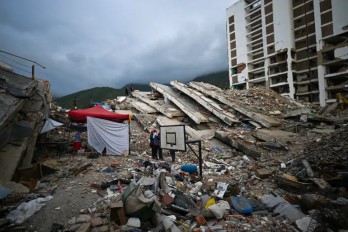
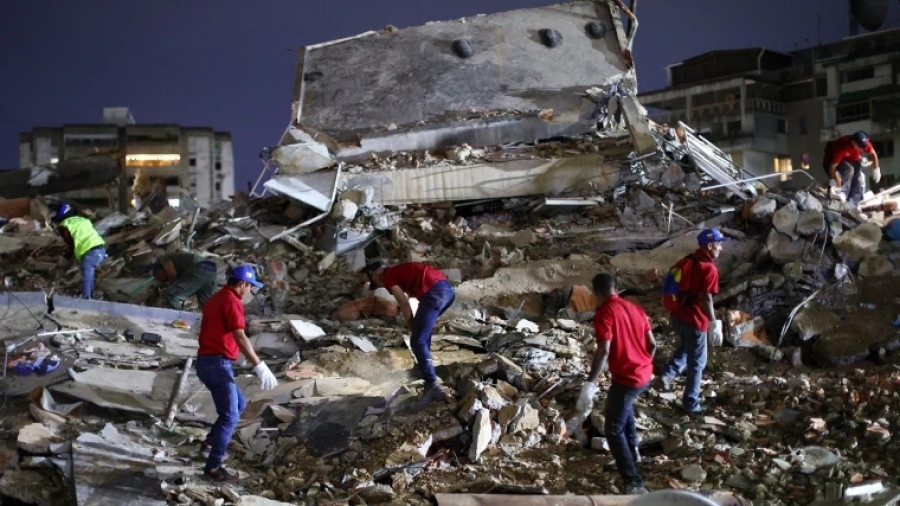
Thousands of buildings have collapsed, trapping countless residents beneath the rubble. More than 46,000 people have been reported missing, while international seismologists warn the final death toll could exceed 10,000. By Thursday evening, authorities had officially confirmed 235 deaths, though officials expect that number to rise significantly.
The disaster has crippled critical infrastructure. The power grid has failed, Caracas' international airport remains closed due to severe damage, and at least eight hospitals, the Venezuelan Red Cross headquarters, and the French embassy have either collapsed or suffered major structural damage. In La Guaira alone, around 70,000 families have lost their homes or can no longer live in them.
It is mentioned that rescue teams continue to search for survivors despite frequent aftershocks, while residents have joined recovery efforts, digging through debris by hand and delivering food, water, and medical supplies to isolated communities. Thousands of displaced people are spending nights outdoors as temporary shelters are being established.
The humanitarian crisis has prompted a swift international response. The United Nations is coordinating rescue operations and aid deliveries, while the United States has temporarily eased selected sanctions to facilitate relief efforts. The Pentagon is assisting with repairs to Caracas airport, and SpaceX has activated free Starlink satellite internet service to help restore communications across the country. Despite the widespread destruction, Venezuela's major oil production facilities have remained largely unaffected, allowing the country's most important economic sector to continue operating.
Seismologists described the twin earthquakes as an exceptionally rare event. Experts believe the first quake likely triggered the second by transferring stress along nearby fault lines at the boundary between the South American and Caribbean tectonic plates. They also warn that strong aftershocks remain possible in the coming days.
Sources: bankingnews.gr, apnews.com, aljazeera.com
Media
- Experts on the Venezuela earthquakes: "The scale of the devastation and damage is shocking"
- What we know about the earthquakes in Venezuela so far
Want to read more like this story?

A strong 7.7 magnitude earthquake hits Myanmar: at least 1,700 fatalities and ,3400 injuries
Mar, 28, 2025 | NewsOn Friday, March 28, a powerful 7.7-magnitude earthquake struck Myanmar at 12:50 local time, result...

Two powerful earthquakes hit China: Reports of 3 people dead
May, 24, 2021 | NewsTwo separate, strong earthquakes that struck in China have resulted in, at least, 3 fatalities. The...

A powerful 7.3 magnitude struck Vanuatu: at least 14 fatalities
Dec, 17, 2024 | NewsOn Tuesday December 17, a strong 7.3 magnitude earthquake hit the coast of Vanuatu resulting in the...
Experts answer: “Why did so many buildings collapse in Turkey?”
Feb, 06, 2023 | NewsFollowing Monday's terrible earthquakes, many of people are reportedly still trapped in the rubble...
Earthquakes: five deadliest earthquakes ever recorded around the world
Feb, 24, 2022 | NewsEarthquakes are one of the most dangerous natural disasters. More than 100 earthquakes of the magni...

6.8-magnitude earthquake struck Morocco with at least 2000 fatalities
Sep, 08, 2023 | NewsA powerful earthquake struck Morocco on Friday night, resulting in the tragic loss of over 2,000 li...
5.6-magnitude earthquake struck Nepal: a) at least 157 fatalities, b) search and rescue should be focused on earthquake relief efforts
Nov, 03, 2023 | NewsA strong earthquake claimed the lives of at least 157 people in the remote Jajarkot area of the Him...

More than 100,000 people have been affected after a 7.4-magnitude earthquake struck Davao Oriental (Philippines) on October 10
Oct, 10, 2025 | NewsOn October 10, a powerful 7.4-magnitude earthquake struck Davao Oriental province in the Philippine...
The five strongest earthquakes ever recorded
Sep, 09, 2023 | NewsThe following lines describe five of the most devastating earthquakes in history: The Great Chile...
Trending


4.1 magnitude earthquake in Nice, France raises concerns among authorities

The first building in Toronto, Canada to exceed 100 storeys.

The tallest structure in Indiana: 1,132 feet tall

Sinkholes Found Near Lotte World Tower

Three-storey building collapses in Benetússer after residents flee warning signs