Danjiang Bridge opens in Taiwan: world-record single-mast design transforms Tamsui River crossing
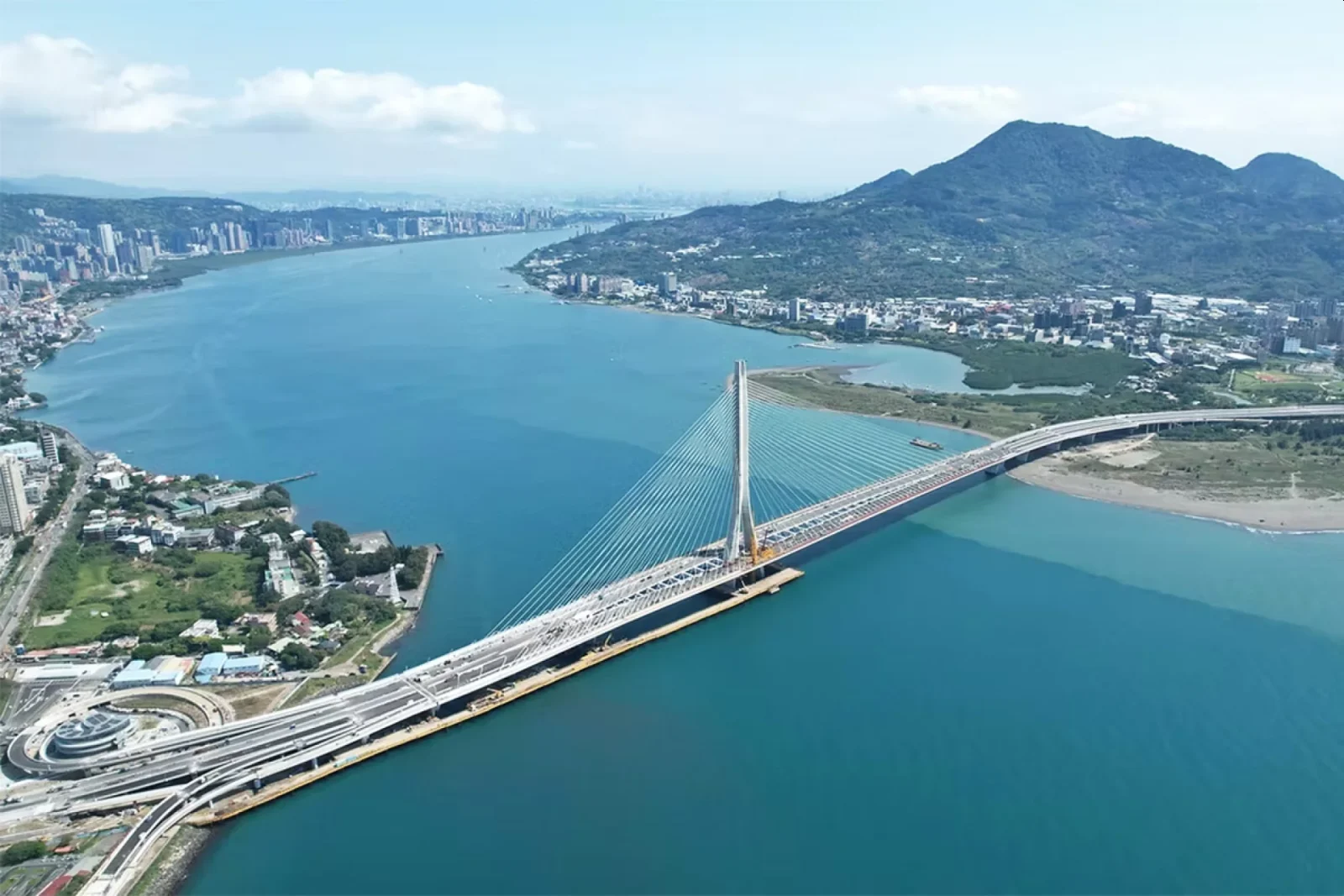
Taiwan has officially opened the Danjiang Bridge, a major new infrastructure project recognized as the world’s longest single-mast asymmetric cable-stayed bridge. The structure spans the mouth of the Tamsui River in northern Taiwan, linking the Tamsui and Bali districts of New Taipei City. It is expected to improve regional traffic flow while also serving as a new architectural landmark.
The bridge was designed by Zaha Hadid Architects in partnership with Leonhardt, Andrä und Partner and Sinotech Engineering Consultants. The design was selected through an international competition in 2015, and construction began in 2019 after several years of planning and engineering development. The bridge officially opened to traffic on May 12, 2026.
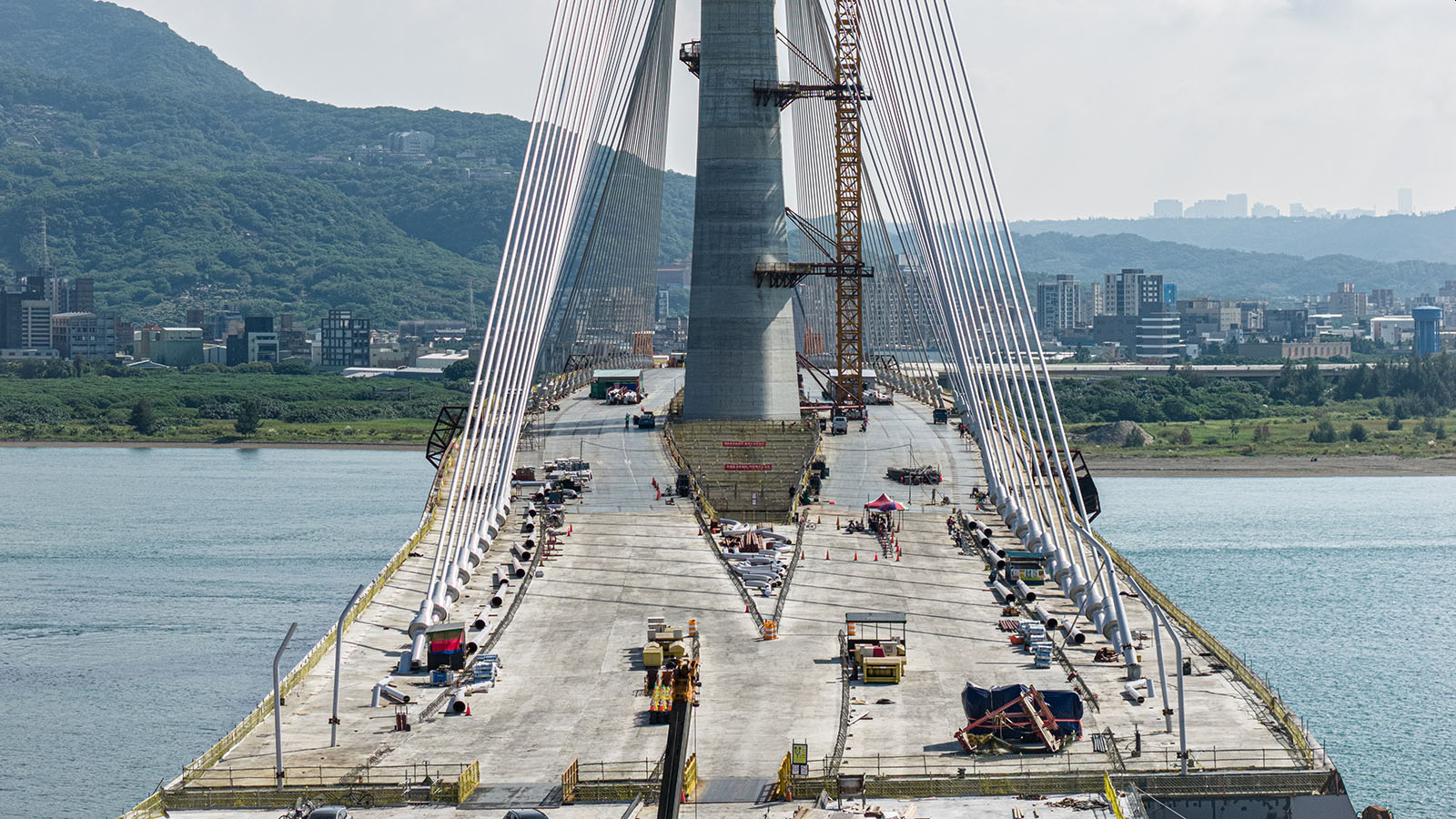
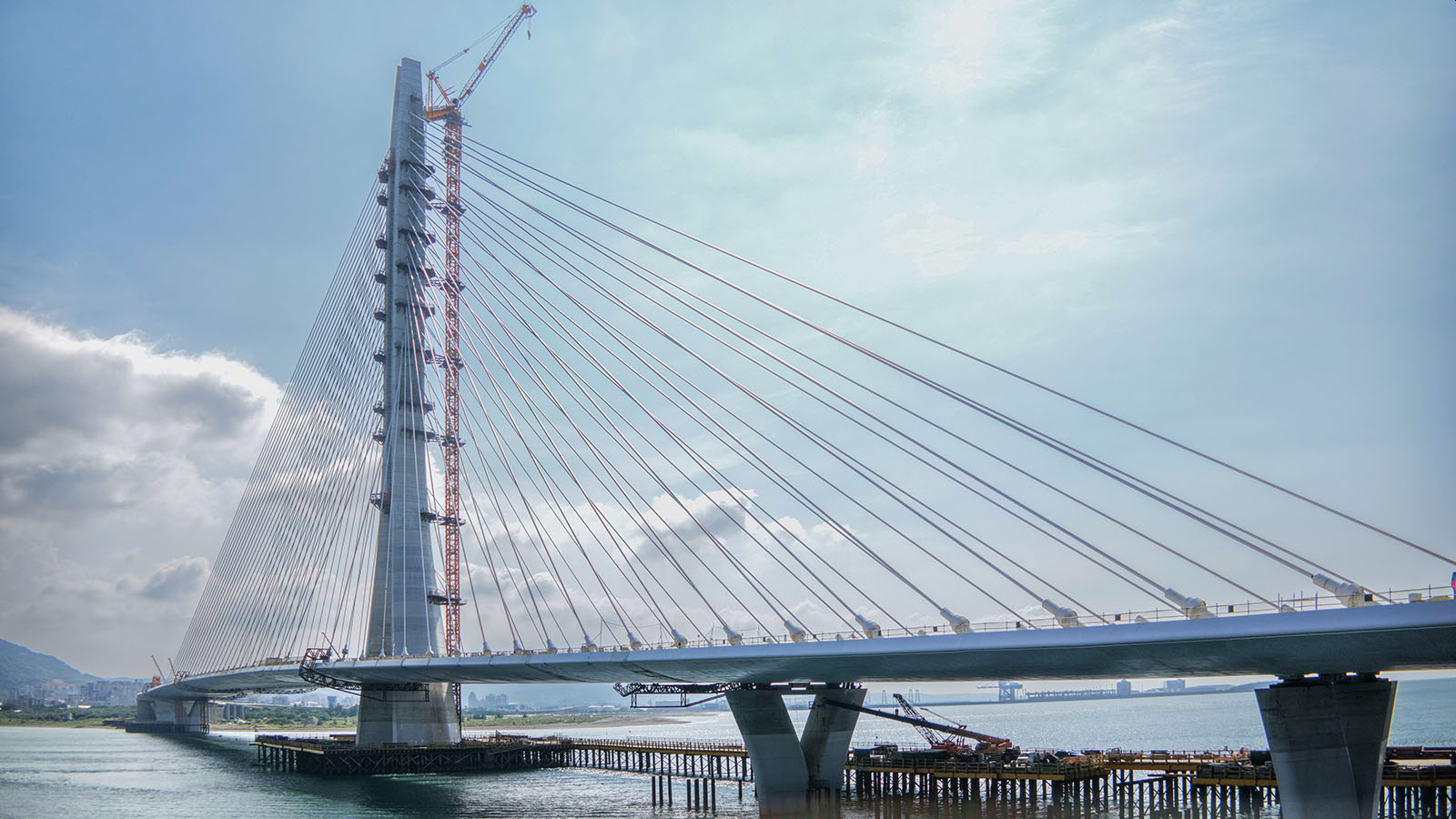
The Danjiang Bridge is approximately 920 meters long and is supported by a single 200-meter-high concrete mast that carries its asymmetrical cable system. Its main span reaches roughly 450 meters, setting a global record for this type of single-tower cable-stayed bridge. The bridge is designed to accommodate cars, buses, scooters, bicycles, and pedestrians, with provisions for a future extension of the Danhai Light Rail Transit system.
Strategically located at the estuary of the Tamsui River, the bridge forms part of Taiwan’s wider transportation upgrade plans. Authorities expect it to ease congestion on the nearby Guandu Bridge while strengthening connections between major routes such as Highway 2, Highway 15, and the West Coast Expressway, as well as important hubs including Taipei Port and Taoyuan International Airport. The project is estimated to shorten travel distances by nearly 15 kilometers and reduce commute times by about 25 minutes.
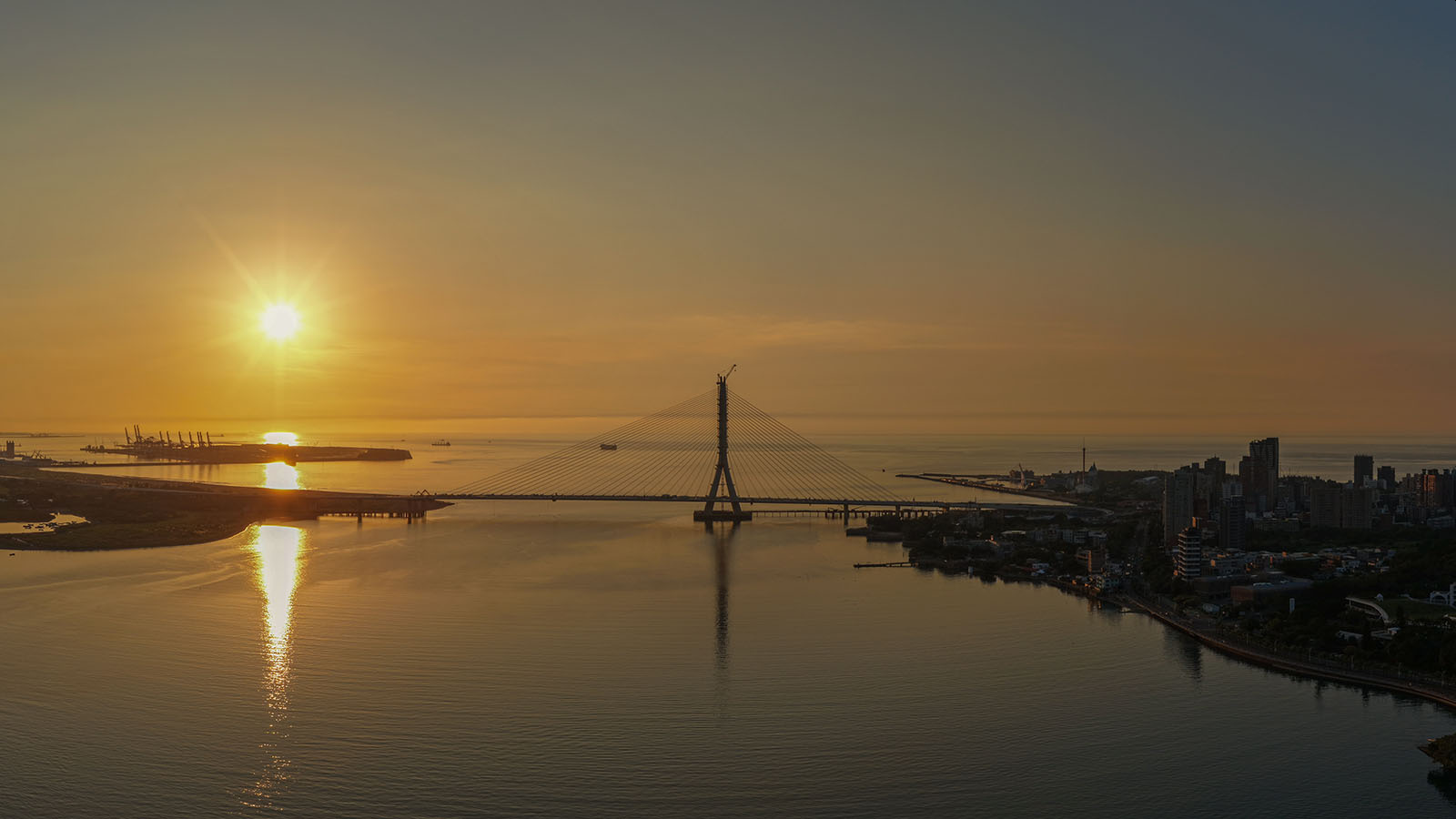
Beyond its transport function, the bridge has gained international attention for its distinctive design and site-sensitive engineering approach. The single-mast structure was chosen to reduce visual impact on the river landscape and help preserve the well-known sunset views along the Tamsui waterfront. Detailed 3D environmental modeling helped determine the mast’s placement and height to maintain river navigation and reduce disruption to the surrounding estuary environment.
From an engineering standpoint, the project also had to address significant challenges, including frequent earthquakes, strong coastal winds, typhoon conditions, and active shipping traffic. Engineers incorporated seismic protection measures, including pier supports, cable stays, hydraulic dampers, friction pendulum bearings, and synthetic rubber pads, along with carefully designed steel deck systems to improve safety and durability under demanding conditions.
During the opening ceremony, Taiwanese President Lai Ching-te described the bridge as a source of national pride and a new international landmark for Taiwan. The opening was marked by large-scale lighting displays and public celebrations along the riverfront, highlighting its cultural as well as practical importance.
With its record-setting span, distinctive asymmetrical silhouette, and advanced engineering, the Danjiang Bridge now stands as both a vital transport connection and a significant example of contemporary bridge architecture in Taiwan.
Sources: parametric-architecture.com, designboom.com, theiet.org
Image Gallery
Want to read more like this story?

World’s longest single-tower bridge nears completion
Jan, 10, 2026 | NewsImages have emerged of the Danjiang Bridge in Taiwan, a major new infrastructure project that is be...

Types of bridges
Jun, 01, 2023 | EducationArch Bridge An arch bridge is a type of bridge that uses a curved, semi-circular structure, kno...

The most famous bridges of the world
Aug, 26, 2015 | NewsThere are so many bridges in the world in different styles, like old stone bridges or steely, footbr...

World's most frightening bridges to cross: Part 1
Mar, 20, 2020 | NewsBridges are structures that enable crossings over physical barriers including rivers, valleys and c...

Multi-Modal Bridge Being Built in Portland Bans Cars
Aug, 25, 2014 | NewsConstruction is currently underway on the country’s first multi-modal bridge that bans private cars....
An engineering point of view for the Tacoma Narrows Bridge collapse
Apr, 04, 2023 | EducationIntroduction An iconic civil structure is a bridge. The desire for humans to go from place to...

10 of the longest floating bridges worldwide
Apr, 24, 2024 | NewsConsidered feats of modern engineering, floating bridges play a crucial role in areas where underwa...

Interesting bridges around the world
Mar, 20, 2017 | NewsEach one of them is unique in its own way! 1. Sidu River bridge,...

Frigid Temperatures Delay Tappan Zee Bridge Foundation
Jan, 10, 2014 | NewsThe icy temperatures sweeping across the United States have caused foundation work on the new Tappan...
Trending


The first building in Toronto, Canada to exceed 100 storeys.

4.1 magnitude earthquake in Nice, France raises concerns among authorities

Sinkholes Found Near Lotte World Tower

Europe's 'longest bridge' which cost £746.5m to build
Aman brings signature luxury to Singapore's first supertall skyscraper

7.1-magnitude quake damages historic Kumamoto Castle under restoration