Concrete technology seen as key solution to Nigeria’s building collapse crisis
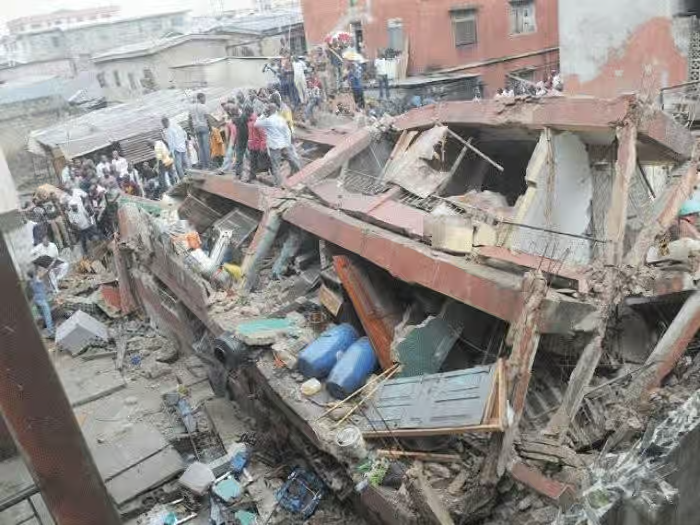
Nigeria has experienced many cases of building collapse over the years, resulting in significant loss of lives and property. Data indicates that from 2010 to 2020, 48 buildings fell in major urban areas—an increase of 77 percent from the decade before. To tackle this ongoing crisis, industry professionals are urging the use of lightweight concrete technology, particularly for high-rise structures.
Dr. Okey Eze, the CEO of Axion Engineering, highlighted that lightweight concrete can play a major role in preventing structural failures because it weighs far less than traditional concrete. By reducing the overall load on a building, he explained, the technology helps improve safety and stability. He noted that lightweight concrete provides several advantages, such as lowering dead loads, offering better thermal insulation, speeding up construction, and enhancing durability. These qualities make it particularly suitable for tall buildings.
Conventional concrete weighs about 2,400 kilograms per cubic meter, while their proposed lightweight concrete system comes in at roughly 1.5 to 1.7 kilograms per cubic meter, Dr. Eze said. That difference has a significant impact on a building’s structural integrity. Dr. Eze also pointed out that Axion Engineering, an indigenous manufacturing company, produces innovative building materials designed to deliver smarter, stronger, and longer-lasting structures. He added that the Federal Ministry of Works has approved the company’s products.
Industry stakeholders who attended the launch event commended Axion for championing modern construction approaches. Catherine Kadiri, Managing Director of CM Star Services Limited, stressed the importance of solutions that are both innovative and practical. The future lies in technologies that help them build durable roads, safe homes, and reliable infrastructure, she said. Dr. Eze called on the government to go further by mandating the use of innovative building materials and ensuring that lightweight concrete systems are included in construction specifications.
Source: guardian.ng
Media
- Expert Recommends Transition To Lightweight Concrete System
Want to read more like this story?
Concrete Structures
Jan, 01, 2019 | EducationConcrete structures are constructions that utilize concrete as the primary building material. Conc...

Concrete that traps CO2 emissions for good
Jul, 16, 2018 | NewsA new method to produce concrete that traps harmful CO2 emissions and increases the compression stre...
Innovative prefab concrete homes in Roosendaal aim to cut CO₂ emissions by 75%
May, 10, 2026 | NewsIn the Dutch city of Roosendaal, four new homes are being built using a new prefab concrete system d...

10 state-of-the-art sustainable materials that will alter construction industry
Jun, 10, 2024 | NewsIn 2024, sustainable materials become state-of-the-art in construction since the construction indus...
The world’s first carbon concrete building constructed by researchers in Germany
Nov, 10, 2022 | NewsThe first building made of carbon-reinforced concrete was inaugurated in September after two and a...

Zero-cement concrete will reduce the environmental impact in construction industry
Aug, 08, 2024 | NewsDue to the climate crisis and the high CO2 emissions of concrete, engineers and scientists are seek...

Vancouver fire hall achieves Zero Carbon emissions
Aug, 06, 2021 | NewsAs the Canada Green Building Council’s Zero Carbon Building Program is on the act, the city of Vanc...

4 Dead in Nigerian Building Collapse
Nov, 09, 2013 | NewsA four-story residential building under construction in one of the most expensive communities in Afr...
Topology optimization for manufacturable 3D-printed concrete structures
Jul, 15, 2026 | NewsConcrete is the most used construction material worldwide, but its production is also one of the lar...
Trending


4.1 magnitude earthquake in Nice, France raises concerns among authorities

The first building in Toronto, Canada to exceed 100 storeys.

The tallest structure in Indiana: 1,132 feet tall

Sinkholes Found Near Lotte World Tower

Three-storey building collapses in Benetússer after residents flee warning signs

World Bank estimates Venezuela's earthquake losses at $19.6 Billion