Panama: Two strong earthquakes shook the country
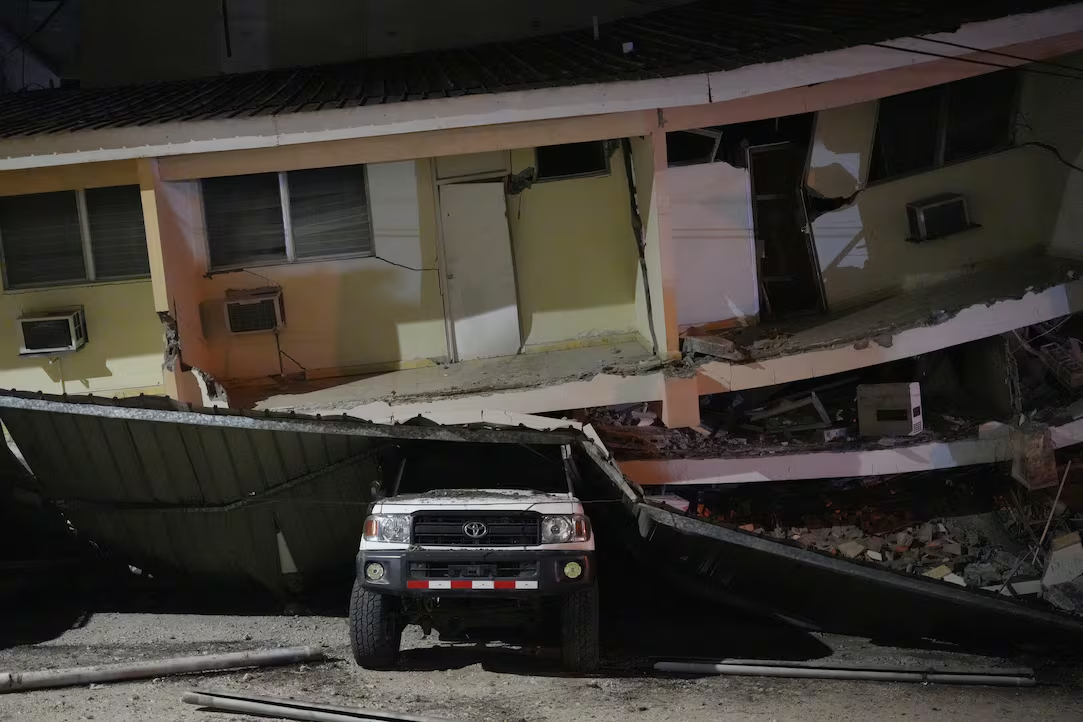
Panama was rattled by two powerful earthquakes on Friday October 9, resulting in significant damage to buildings, roads, and public infrastructure across the country. The earthquakes measured 7.7 and 6.6 in magnitude and were followed by more than 100 aftershocks, including ones measuring 5.8, 5.5 and 5.2, forcing residents to evacuate their homes and prompting the government to declare a national state of emergency.
The first earthquake struck at 12:56 p.m. local time, with its epicenter located about 10 kilometers southwest of Pitaloza Arriba in Herrera province, central Panama. According to the United States Geological Survey (USGS), the earthquake originated at a shallow depth of around 10 kilometers, and an estimated 4.6 million people experienced moderate to severe shaking. The tremors were felt across Panama and in neighboring Colombia.
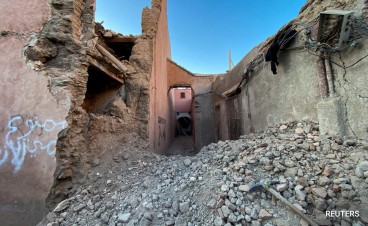
Authorities stated that 27 people had been injured, with injuries ranging from minor to moderate, and no fatalities were reported. Damage was recorded in all 10 of Panama's provinces and two Indigenous territories, though it was concentrated in the central provinces of Veraguas, Herrera, Coclé, and Los Santos. Several buildings, including houses, hotels, and historic churches, were partially or completely destroyed. In La Villa de Los Santos, a colonial-era community about 64 kilometers northeast of the epicenter, homes collapsed along with the Church of San Atanasio, declared a National Historic Heritage Site in 1938.
Many people were forced to leave their houses because of structural damage and fears that further tremors could cause buildings to collapse. In Las Minas, located in Herrera province, residents reported cracks in their houses and expressed concern that continued seismic activity could worsen the damage.
By Saturday, Panama's National Civil Protection System had tallied roughly 420 damaged homes and about the same number of public schools, along with seven hotels, at least 13 churches and nine bridges. Several roads developed cracks, while landslides disrupted transport and temporarily cut off access to some communities.
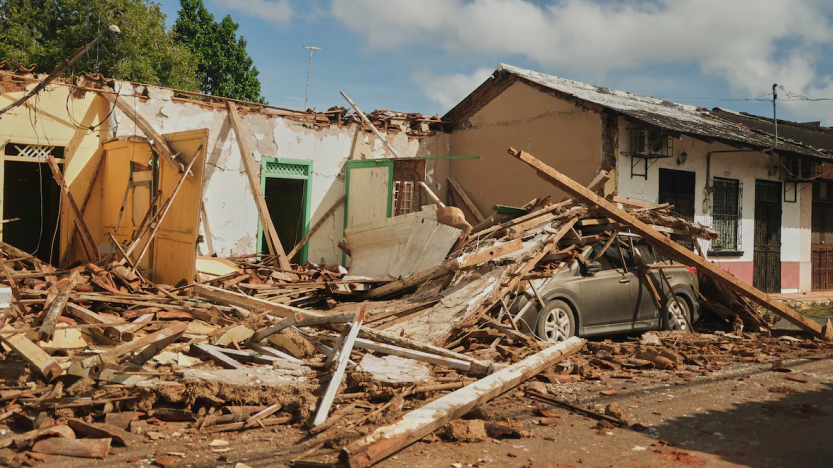
The earthquakes also disrupted several essential services. In Panama City, one water treatment plant was operating at just 20% of its capacity on Saturday. Temporary facilities equipped with cots were also established at six hospitals to help accommodate patients.
Despite the widespread disruption, the Panama Canal continued operating normally, with the Canal Authority reporting that specialized technical teams were inspecting facilities for possible damage.
In response to the disaster, the Panamanian government declared a state of emergency on Saturday. Presidential Minister Juan Carlos Orillac announced the measure at a news conference in Panama City, stating that homes, schools, health-care facilities, roads and hotels were among the damaged infrastructure.
Meanwhile, tsunami warnings were initially issued for 11 countries across the region. However, the US Tsunami Warning System later confirmed that there was no tsunami threat.
Although the damage in Panama was extensive, the absence of reported fatalities was notable compared with recent disasters elsewhere in the region, where two earthquakes in Venezuela in June killed more than 6,500 people and a 7.4-magnitude earthquake in Colombia in August killed at least 289. Carlos Valdes, head of the Seismology Department at the National Autonomous University of Mexico, suggested that Panama's strict building codes, particularly those governing high-rise construction in the capital, may have helped limit the impact on human life.
In all, the disaster has once again highlighted the importance of earthquake-resistant construction, regular structural inspections, and effective emergency planning in regions vulnerable to powerful earthquakes, a point underlined by the timing: the quake struck just three days before Panama was due to hold a national earthquake evacuation drill.
Media
- Panama rocked by 2 powerful earthquakes and multiple aftershocks, prompting evacuations
Want to read more like this story?

5.8-magnitude earthquake strikes Ecuador coast: damaged buildings, huge loss of property, no tsunami
Mar, 28, 2022 | NewsA huge loss of property was suffered when an earthquake of magnitude 5.8 struck Ecuador coast on Sa...

Two powerful earthquakes hit China: Reports of 3 people dead
May, 24, 2021 | NewsTwo separate, strong earthquakes that struck in China have resulted in, at least, 3 fatalities. The...
Earthquakes: five deadliest earthquakes ever recorded around the world
Feb, 24, 2022 | NewsEarthquakes are one of the most dangerous natural disasters. More than 100 earthquakes of the magni...

6.1-magnitude earthquake hit Turkey: at least 22 injuries
Oct, 29, 2025 | NewsA strong earthquake struck western Turkey on Monday, October 27, shaking several provinces and caus...

Experts answer: “Why did so many buildings collapse in Turkey?”
Feb, 06, 2023 | NewsFollowing Monday's terrible earthquakes, many of people are reportedly still trapped in the rubble...
6.7-Magnitude earthquake strikes Southern Peru: Tremors felt across several regions
Aug, 20, 2026 | NewsAt least three people have been injured and buildings damaged after a strong earthquake struck south...
The five strongest earthquakes ever recorded
Sep, 09, 2023 | NewsThe following lines describe five of the most devastating earthquakes in history: The Great Chile...
5.9 magnitude earthquake rattled Indonesia; No fatalities or injured were reported
Nov, 18, 2026 | NewsA strong earthquake struck Indonesia's East Nusa Tenggara province on Wednesday, November 18, 2026,...

6.6-magnitude earthquake shakes Indonesia’s capital: buildings collapsed, no tsunami alert
Jan, 14, 2022 | NewsParts of Indonesia’s main island of Java were shaken by a powerful earthquake of 6.6-magnitude on F...
Trending

Spectacular interchanges around the world

Cairo, Egypt: Building collapse caused 6 casualties while 7 others were injured

China: Hangzhou Bay cross-sea railway bridge reaches major construction milestone


New AI system identifies multiple defects in concrete bridges using photographs
New AI system identifies multiple defects in concrete bridges using photographs

Kyrgyzstan plans record-breaking glass suspension bridge in Ala-Archa National Park