Manchester’s skyline on the rise: set to become Europe’s fourth tallest city by 2030
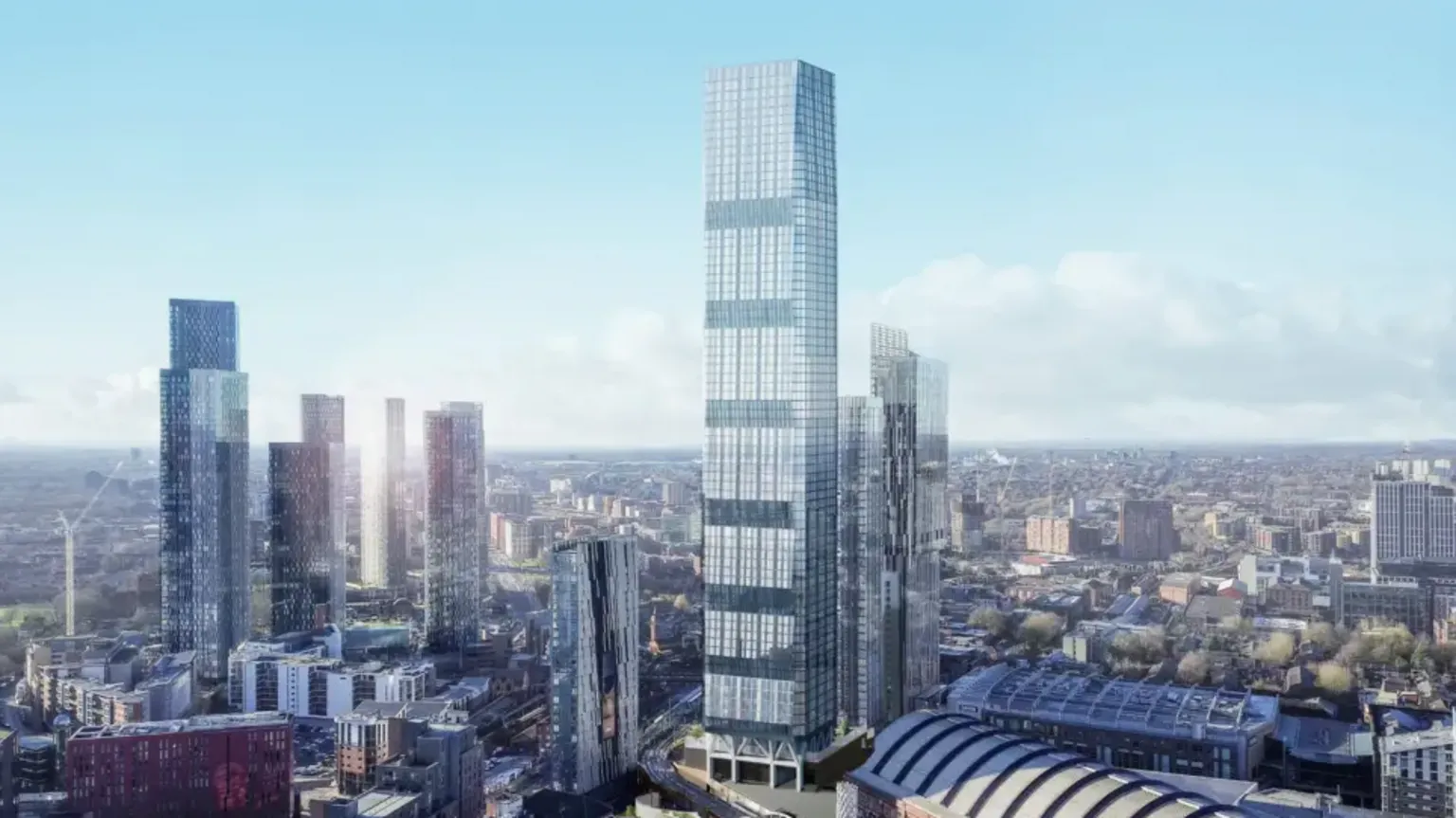
Manchester is set to rise in Europe’s skyline rankings, with projections suggesting it could become the continent’s fourth “tallest city” by 2030. Currently placed seventh, the ranking is based on how many buildings exceed heights of 50m, 100m, and 150m. According to Barbour ABI, if all approved and proposed developments are completed, Manchester could surpass cities like Paris and Frankfurt, reaching over 200 buildings taller than 50m and at least 10 exceeding 150m.
At present, Manchester has 26 buildings over 100m tall, including 10 above 150m—a significant increase from just four buildings over 100m in 2017. In Europe’s current ranking, it sits behind Moscow, Istanbul, London, Paris, Frankfurt, and Warsaw.
Several factors explain why Manchester’s skyline is expanding so rapidly. One key reason is the relatively lower cost of land compared to other major cities. Furthermore, the city has seen a steady influx of young professionals, creating strong demand for high-rise residential properties and giving developers confidence in long-term returns. Space constraints in the city center also play a role. More specifically, Manchester is more compact than cities like London or even Birmingham and hence building upwards has become a practical solution.
The city’s journey toward a taller skyline has been gradual. Early landmarks like the CIS Tower, completed in 1962 at 118m, and City Tower in 1965 at 107m, set the foundation. Decades later, Beetham Tower, finished in 2006, became a defining feature at 168m. This was eventually overtaken in 2018 by the Deansgate Square South Tower, which stands at 201m.
Looking ahead, even more ambitious projects are planned. A major highlight is a proposed 76-storey skyscraper reaching 246m, which would become the tallest building in the UK outside London. The city is also seeing a wave of office, hotel, and mixed-use developments, alongside several large-scale residential towers. Among these are projects exceeding 70 storeys, including Viadux Phase 2, a 76-storey tower with over 900 apartments, and other high-rise schemes scheduled for completion by the end of the decade.
Overall, Manchester’s rapid vertical growth reflects a combination of economic opportunity, population trends, and spatial limitations. These factors are reshaping the city into one of Europe’s most prominent high-rise hubs.
Sources: bbc.com, aol.com, architectsjournal.co.uk
Want to read more like this story?

Tallest UK tower: plans approved
Apr, 16, 2025 | NewsPlans for the tallest skyscraper outside London have been officially approved for Manchester, marki...
One London: A landmark project shaping the capital’s next chapter
Jun, 01, 2026 | NewsAroland Holdings, advised by Perennial Holdings, Stanhope and Eric Parry Architects, has introduced...

World’s tallest building to reach two kilometers in height
Apr, 28, 2025 | NewsSaudi Arabia is laying the groundwork for another ambitious megaproject: a record-breaking skyscrap...

Austria’s Tallest Building Officially Opens
Mar, 10, 2014 | NewsThe DC Tower 1, located along the Danube River in Vienna, Austria, officially opened last week and b...

236 New High-Rise Buildings Planned for London’s Skyline
Mar, 14, 2014 | NewsA new study published, by the New London Architecture think tank on Wednesday, found that there are...

SURE Unveils Endless City Plans for London
Aug, 29, 2014 | NewsSURE Architecture unveiled plans this week for a futuristic skyscraper that could house thousands of...
Cardiff approves 50-storey skyscraper which is set to become Wales’ tallest building
Mar, 16, 2026 | NewsPlans for a 50-storey skyscraper in Cardiff—set to become the tallest building in Wales—have receiv...

Proposal for Oakland residential tower: it would be city’s tallest building
Oct, 15, 2022 | NewsPlans have been submitted for an East Bay housing high rise that, if built, will become Oakland's t...

Skinny Skyscraper to Become London’s Tallest Residential Building
May, 05, 2014 | NewsA 73-story skyscraper will become London’s tallest residential building if it receives approval from...
Trending


4.1 magnitude earthquake in Nice, France raises concerns among authorities

The first building in Toronto, Canada to exceed 100 storeys.

The tallest structure in Indiana: 1,132 feet tall

Europe's 'longest bridge' which cost £746.5m to build

Three-storey building collapses in Benetússer after residents flee warning signs
Nine fatalities in Moshi (Pune) waste plant collapse