Carbon-negative building material developed by Worcester Polytechnic Institute researchers could reshape sustainable construction
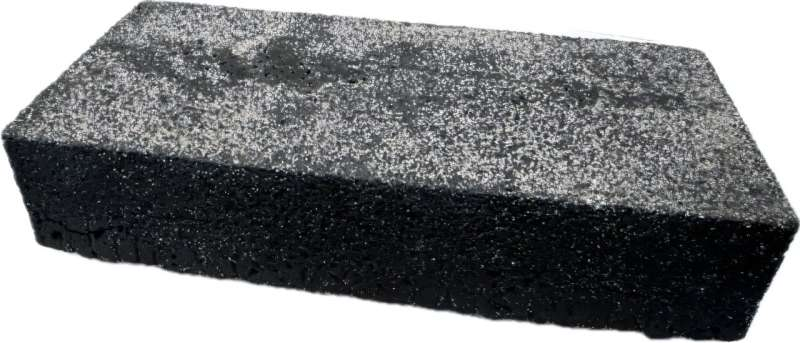
Researchers at Worcester Polytechnic Institute (WPI) have created a carbon-negative construction material that may play a major role in the future of sustainable building. Their findings, published in Matter, present a new material called enzymatic structural material (ESM)—a durable, resilient, and completely recyclable building option made through an energy-efficient, bio-inspired method.
The project, led by Nima Rahbar, the Ralph H. White Family Distinguished Professor and head of WPI’s Department of Civil, Environmental, and Architectural Engineering, centers on an enzyme that turns carbon dioxide into solid mineral particles. These particles are then bound together and allowed to cure under gentle conditions, forming usable building components in just a few hours. In contrast to conventional concrete, which requires high heat and long curing times, ESM can be produced quickly with a far smaller environmental footprint.
Concrete is the most widely used construction material in the world and making it generates nearly 8% of global CO₂ emissions, Rahbar explained. His team has created a realistic, scalable alternative that not only cuts emissions but removes carbon from the atmosphere. Producing one cubic meter of ESM locks away over 6 kilograms of CO₂, whereas traditional concrete releases about 330 kilograms.
Because ESM cures quickly, can be strengthened as needed, and is easy to recycle, it has strong potential for use in roof systems, wall panels, and prefabricated building modules. Its ability to be repaired rather than discarded could bring down maintenance costs and sharply reduce construction waste. Rahbar noted that even a modest shift toward carbon-negative materials like ESM could have a significant global impact.
This new approach could benefit a wide range of sectors, from affordable housing and climate-resilient infrastructure to post-disaster rebuilding, where lightweight, rapidly produced materials are crucial. And since ESM is made using low energy and renewable biological inputs, it supports worldwide efforts toward carbon-neutral construction and circular manufacturing.
Sources: phys.org, interestingengineering.com, illuminem.com
Want to read more like this story?

Sustainable materials can be used in construction to decrease environmental pollution
Apr, 30, 2024 | NewsEfforts to reduce emissions in the building sector typically focus on operational aspects like heat...

The prospects for carbon-neutral buildings
Oct, 27, 2023 | NewsIn the United Kingdom, buildings account for 33% of greenhouse gas emissions and 40% of global ener...

Concrete alternatives for sustainable construction
Feb, 17, 2026 | NewsCement is one of the most widely used materials in the world, but it comes at a high environmental...
The world’s first carbon concrete building constructed by researchers in Germany
Nov, 10, 2022 | NewsThe first building made of carbon-reinforced concrete was inaugurated in September after two and a...

10 state-of-the-art sustainable materials that will alter construction industry
Jun, 10, 2024 | NewsIn 2024, sustainable materials become state-of-the-art in construction since the construction indus...
Innovative prefab concrete homes in Roosendaal aim to cut CO₂ emissions by 75%
May, 10, 2026 | NewsIn the Dutch city of Roosendaal, four new homes are being built using a new prefab concrete system d...

Digitalization could assist the construction industry reducing its carbon emissions
May, 28, 2024 | NewsIt is well known that the global construction industry significantly contributes to the world's car...

Zero-cement concrete will reduce the environmental impact in construction industry
Aug, 08, 2024 | NewsDue to the climate crisis and the high CO2 emissions of concrete, engineers and scientists are seek...

Concrete is a climate disaster and thus it’s time to clean it up
Oct, 29, 2021 | NewsFor soaring bridges, dramatic skyscrapers and even the path around your local park, builders love c...
Trending


4.1 magnitude earthquake in Nice, France raises concerns among authorities

The first building in Toronto, Canada to exceed 100 storeys.

The tallest structure in Indiana: 1,132 feet tall

Europe's 'longest bridge' which cost £746.5m to build

Three-storey building collapses in Benetússer after residents flee warning signs
Nine fatalities in Moshi (Pune) waste plant collapse