Innovative prefab concrete homes in Roosendaal aim to cut CO₂ emissions by 75%
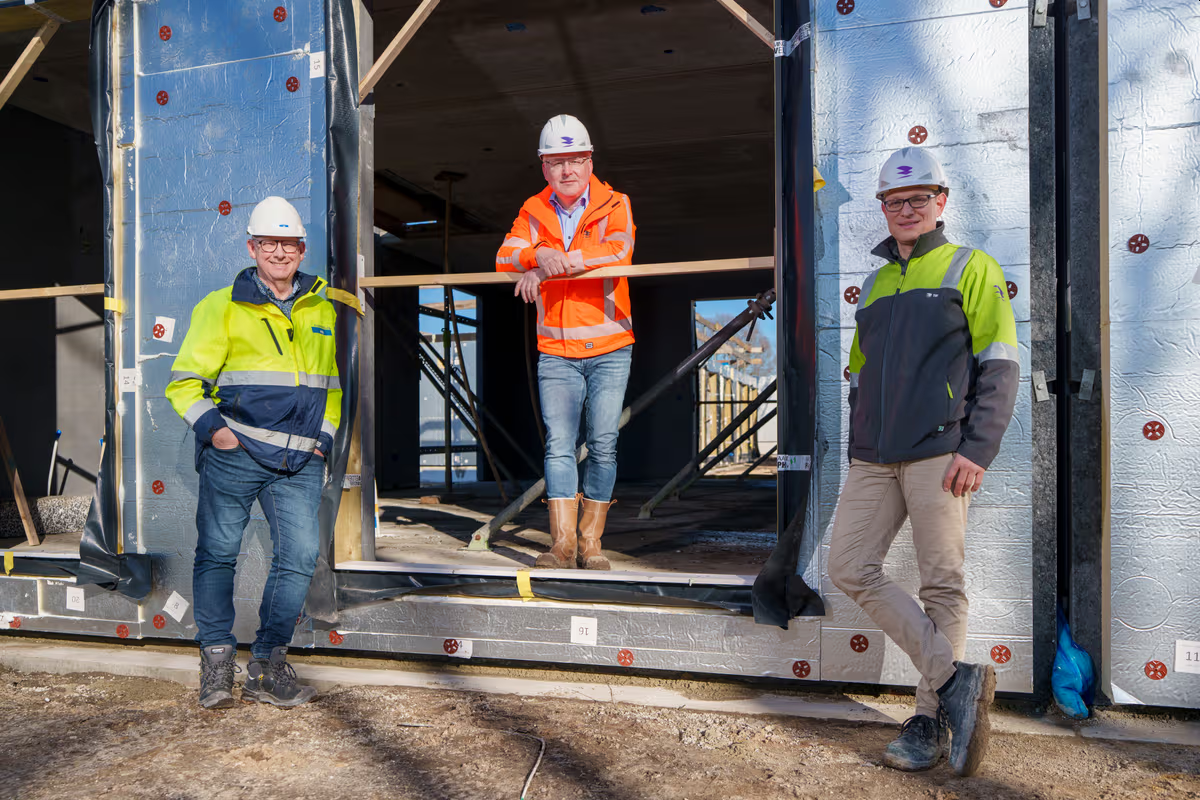
In the Dutch city of Roosendaal, four new homes are being built using a new prefab concrete system designed to reduce carbon emissions. The new construction method is expected to cut CO₂ emissions by up to 75 percent compared to conventional concrete building techniques, highlighting how concrete construction can become more sustainable.
The homes are being developed using the “NEXT level” structural system, a concept created through a collaboration between TBI WOONlab, Voorbij Prefab, VBI, and Hazenberg. The Beekhof housing project in Roosendaal is the first project to put the system into practice.
The idea was first discussed in 2024 during a meeting organised under the TBI Klimaattrein initiative, where industry partners explored ways to reduce the environmental impact of concrete construction. What began as an informal discussion later developed into a collaborative effort combining several concrete innovations into one building system.
According to Dick van Ginkel, technical innovation manager at TBI WOONlab, the project is notable because it brings together multiple sustainable concrete technologies in a single structure. These include the use of “impakt concrete” and nearly cement-free hollow-core floor slabs, both of which contribute to reductions in carbon emissions.
Much of the environmental benefit comes from replacing traditional cement with alternative materials, including cement substitutes and biochar, a material capable of storing carbon. The reduction in cement use has lowered the project’s overall carbon footprint.
Wim Jansze, director of innovation, sustainability and technology at VBI, explained that a standard hollow-core concrete slab typically produces around 37 kilograms of CO₂ per square metre. The newly developed version used in this project reduces that figure to roughly 19 kilograms per square metre.
The four homes are intended as a real-world pilot project, but the companies involved believe the system could be adopted more widely in future prefab housing developments. Van Ginkel said the long-term goal is to turn the concept into a standard solution that can help reduce emissions across the construction sector.
However, the team also noted that broader implementation may depend on more flexible regulations, as innovative building materials currently require separate approvals for each municipality or project, slowing down adoption.
Through the Roosendaal project, the partners hope to demonstrate that the concrete industry can play a role in sustainable construction and that substantial CO₂ reductions are achievable with current technology.
Source: ioplus.nl
Want to read more like this story?

Zero-cement concrete will reduce the environmental impact in construction industry
Aug, 08, 2024 | NewsDue to the climate crisis and the high CO2 emissions of concrete, engineers and scientists are seek...
Concrete that traps CO2 emissions for good
Jul, 16, 2018 | NewsA new method to produce concrete that traps harmful CO2 emissions and increases the compression stre...

Concrete alternatives for sustainable construction
Feb, 17, 2026 | NewsCement is one of the most widely used materials in the world, but it comes at a high environmental...

Concrete is a climate disaster and thus it’s time to clean it up
Oct, 29, 2021 | NewsFor soaring bridges, dramatic skyscrapers and even the path around your local park, builders love c...

Sustainable materials can be used in construction to decrease environmental pollution
Apr, 30, 2024 | NewsEfforts to reduce emissions in the building sector typically focus on operational aspects like heat...
Concrete Structures
Jan, 01, 2019 | EducationConcrete structures are constructions that utilize concrete as the primary building material. Conc...
The world’s first carbon concrete building constructed by researchers in Germany
Nov, 10, 2022 | NewsThe first building made of carbon-reinforced concrete was inaugurated in September after two and a...

Digitalization could assist the construction industry reducing its carbon emissions
May, 28, 2024 | NewsIt is well known that the global construction industry significantly contributes to the world's car...
New Eurocode 4 sets new standards for efficient and sustainable steel–concrete design
Mar, 24, 2026 | NewsA new edition of Eurocode 4 has been released, providing updated guidance for designing composite s...
Trending


4.1 magnitude earthquake in Nice, France raises concerns among authorities

The tallest structure in Indiana: 1,132 feet tall

The first building in Toronto, Canada to exceed 100 storeys.