
China: Hangzhou Bay cross-sea railway bridge reaches major construction milestone
- Oct, 23, 2026
- Bridge Management Bridge Abutments Bridge Design Bridges Structural Design Limit States Load Factors Multiscale Methods Structural Systems Structure Types Metal Structures Snow And Rain Loads Other Structural News On Projects / Industry Other News
- China, Jiaxing
- Authored by: thestructuralengineer.info
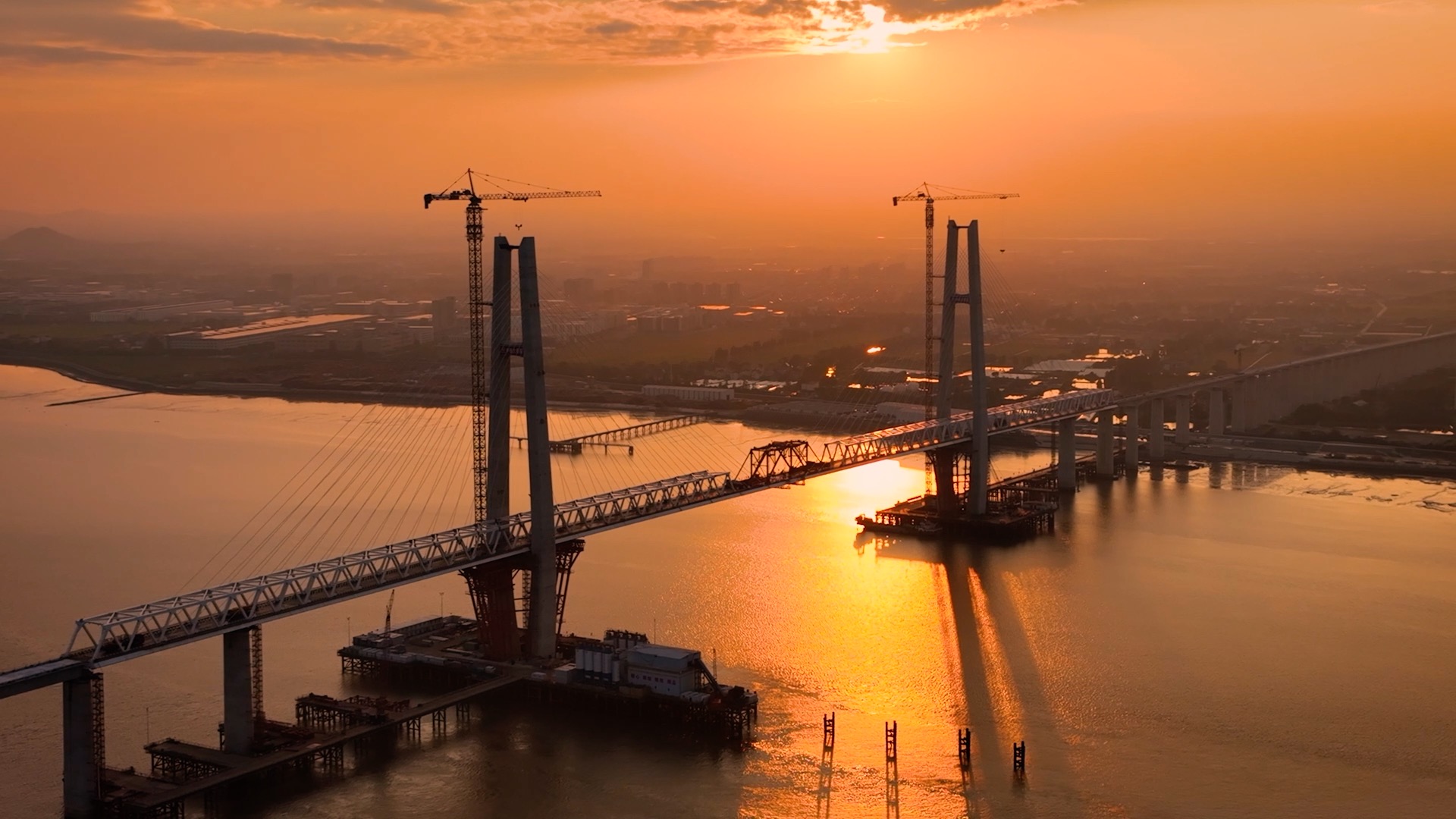
The southern navigation channel bridge of the Hangzhou Bay Cross-Sea Railway Bridge reached a major construction milestone on Saturday evening, when workers completed the closure of its steel truss girder. It is the first of the project’s three navigation channel bridges to reach this stage, marking significant progress on what is described as the world’s longest cross-sea high-speed railway bridge. The milestone also clears the way for further cable tensioning, bridge deck construction and the transition to the bridge’s final structural system.
The bridge is part of the Nantong–Ningbo High-Speed Railway. According to the People’s Daily, the 29.2-kilometer bridge is the longest and highest-standard group of cross-sea railway bridges currently under construction worldwide.
The project includes northern, central and southern navigation channel bridges, along with approach bridges across open water and shallow coastal areas. Located in the central waters of Hangzhou Bay, the southern navigation channel bridge is 814.5 meters long, with a main span of 364 meters. Its design allows vessels of up to 3,000 deadweight tons to pass beneath it, the report said.
Construction has been complicated by Hangzhou Bay’s demanding natural conditions. The bay is known for its powerful tides, with a maximum tidal range of nearly nine meters, fast-moving currents and frequent strong winds. These conditions leave a limited period each year for offshore work. High salinity and humidity, combined with continual seabed erosion and sediment buildup, also create challenges for construction accuracy, structural safety and marine operations.
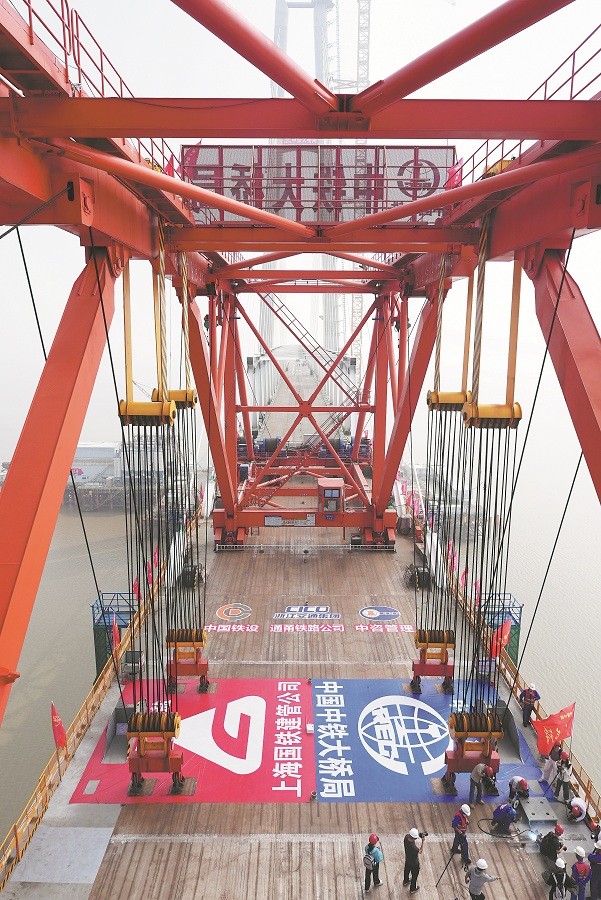
To address these difficulties, the project team adopted a double-sided incremental launching technique to bring the steel girder sections together. The method was selected to suit the bay’s strong tidal conditions and the technical demands of the closure operation.
Engineers also used the BeiDou Navigation Satellite System and digital monitoring equipment to track construction progress. Monitoring points were installed on the bridge towers, steel girders and temporary supports, allowing stress, cable forces and structural displacement to be measured at millisecond intervals.
It should be noted that the engineers used wind-resistant devices along the bridge and transverse restrainers to help them make real-time adjustments to the alignment of the closure gap. In addition, the final joining work was scheduled for nighttime, when temperatures were more stable, reducing the risk of thermal expansion and deformation. Furthermore, a separate meteorological and hydrological early-warning system was also introduced to improve safety and allow construction schedules to be adjusted in response to changing conditions.
Moreover, with the southern navigation channel bridge now closed, the next stages will include gradually releasing cable forces, casting the concrete closure joints, installing and tensioning the remaining cables, and fitting permanent bearings. These operations will move the bridge closer to its final structural configuration.
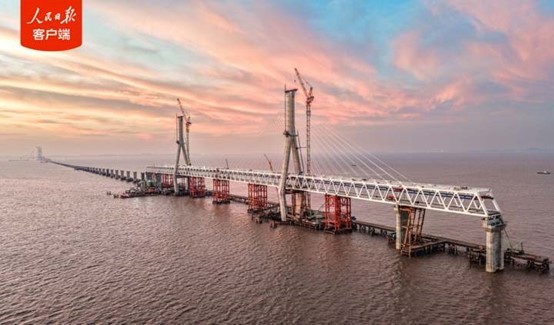
All offshore pile foundations and pier shafts have been completed. Work on the main structures of all three navigation channel bridges is continuing, while construction is progressing across the wider railway project.
The Nantong–Ningbo High-Speed Railway will extend for 301 kilometers and form part of China’s coastal high-speed rail corridor. Once operational, it is expected to strengthen rail connections across the Yangtze River Delta, reduce travel times between coastal cities in Jiangsu and Zhejiang provinces, and improve the region’s wider transport network. The line is also expected to support closer economic integration and long-term development across the region.
Sources: globaltimes.cn, cgtn.com
Media
- World's Longest High-Speed Rail Sea Bridge Completes Main Tower Construction
Want to read more like this story?

Types of bridges
Jun, 01, 2023 | EducationArch Bridge An arch bridge is a type of bridge that uses a curved, semi-circular structure, kno...

World's highest railway bridge to open in J&K
Mar, 26, 2023 | NewsWith the upcoming opening of the tallest railway bridge in the world crossing the Chenab River, Jam...

The most famous bridges of the world
Aug, 26, 2015 | NewsThere are so many bridges in the world in different styles, like old stone bridges or steely, footbr...

Croatia to construct a new bridge from the mainland to Krk Island
Mar, 07, 2024 | NewsIn order to manage the traffic congestion on the aging (opened on July 19, 1980) Tito Bridge, a new...

New bridge building method : The "umbrella" method
Aug, 05, 2020 | NewsA new bridge construction method, which was introduced by structural engineers at the Vienna Univer...

Interesting bridges around the world
Mar, 20, 2017 | NewsEach one of them is unique in its own way! 1. Sidu River bridge,...

World's most frightening bridges to cross: Part 1
Mar, 20, 2020 | NewsBridges are structures that enable crossings over physical barriers including rivers, valleys and c...

World's most frightening bridges to cross: Part 2
Mar, 21, 2020 | NewsBridges have been part of engineering features since ancient times. Through the ages, their design...

Yavus Sultan Selim Bridge: a bridge between two continents!
Sep, 01, 2016 | NewsOn 26th of August 2016, the opening ceremony of the third bridge of Bosporus - known as Yavus Sultan...
Trending

Spectacular interchanges around the world

Severe storms and possible tornadoes cause widespread damage across North Carolina
Glass cafe at 2,600 feet in the air: it opens on world's tallest bridge

The Leaning Tower of Pisa: Ingenious design and ongoing stability efforts

Athens, Greece: Building collapsed after explosion

Cairo, Egypt: Building collapse caused 6 casualties while 7 others were injured

