Gigaton raises $26 million to help cement manufacturers cut costs and carbon emissions
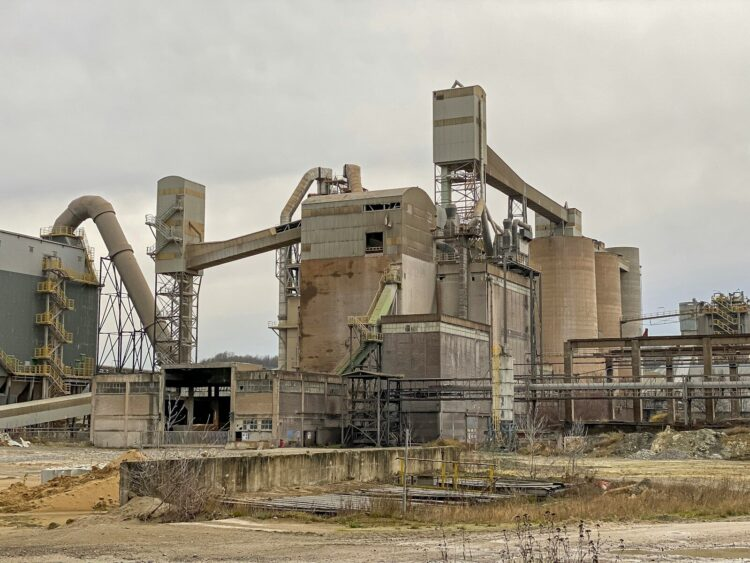
A British startup is betting that artificial intelligence can help solve one of the world's dirtiest industrial problems: cement production. More specifically, Gigaton, a London-based company developing AI tools for cement manufacturers, has raised $26 million in Series A funding to expand its operations. The latest investment brings the company's total funding to $35 million.
The company is targeting an industry that sits at the heart of global construction but also carries a heavy environmental burden. Cement is one of the most widely used materials in the world and a crucial ingredient in concrete, yet its production generates enormous amounts of carbon emissions. Industry estimates suggest cement manufacturing is responsible for around 8% of global CO₂ emissions, largely because of the high temperatures required in the production process.
While many industries have embraced digital technologies, much of the cement sector still relies on equipment and operating methods that have changed little over decades. At the same time, manufacturers are under growing pressure to reduce emissions, cut fuel costs and modernize their facilities. Gigaton believes AI can help bridge that gap.
The company's technology combines sensors installed on production equipment with machine-learning software that continuously monitors kiln performance. By analyzing large amounts of operational data in real time, the system helps plant operators adjust temperatures and fuel use more accurately, improving efficiency while reducing waste and emissions.
Technology becomes even more valuable as cement producers experiment with alternative fuels. Although these substitutes can reduce dependence on coal, they are often less predictable and more difficult to manage, creating a need for smarter control systems.
Gigaton's roots lie in academic research. Co-founder Daniel Summerbell began developing technology during his doctoral studies at the University of Cambridge, where he focused on improving cement manufacturing processes. The research later evolved into a commercial venture aimed at bringing advanced AI tools into heavy industry. Today, the company works with major producers including Adani Cement, Heidelberg Materials and Holcim. According to Gigaton, customers using its platform are already saving more than $1 million annually through lower energy costs and reduced emissions.
The startup has also undergone a transformation of its own. Founded in 2022 as Carbon Re, it recently rebranded to Gigaton, a name that reflects its long-term ambition of helping industry achieve large-scale emissions reductions while improving productivity.
The shift also highlights a broader trend in climate technology. Investors and customers increasingly want solutions that deliver immediate business value alongside environmental benefits. For Gigaton, that means helping manufacturers lower costs, improve operational control and prepare for a future of more automated production.
Although the company initially explored applications in steel and glass manufacturing, it has chosen to focus first on cement. Once that business is further established, Gigaton plans to expand its technology into other energy-intensive industries.
The funding round was led by Plural, with participation from several existing and new investors. The company plans to use the capital to grow its team and accelerate deployment of its technology.
At a time when much of the AI industry is focused on chatbots and content generation, Gigaton is pursuing a different path. Its goal is not to replace human conversations but to help industrial machines operate more intelligently, making some of the world's most important manufacturing processes cleaner, cheaper and more efficient.
Sources: resiliencemedia.co, enterprise.cam.ac.uk, esgtoday.com
Want to read more like this story?

Zero-cement concrete will reduce the environmental impact in construction industry
Aug, 08, 2024 | NewsDue to the climate crisis and the high CO2 emissions of concrete, engineers and scientists are seek...

Cement's production high environmental footprint
Jul, 24, 2019 | NewsThe production of cement results in more pollution in the environment than all the trucks and just 1...

Concrete is a climate disaster and thus it’s time to clean it up
Oct, 29, 2021 | NewsFor soaring bridges, dramatic skyscrapers and even the path around your local park, builders love c...

Digitalization could assist the construction industry reducing its carbon emissions
May, 28, 2024 | NewsIt is well known that the global construction industry significantly contributes to the world's car...
Boston: Innovative cement used on a large-scale building marks a new era
Apr, 09, 2024 | NewsSublime Systems is the most innovative sustainability company of 2024 as it was recognized by Fast...
Concrete that traps CO2 emissions for good
Jul, 16, 2018 | NewsA new method to produce concrete that traps harmful CO2 emissions and increases the compression stre...

Sustainable materials can be used in construction to decrease environmental pollution
Apr, 30, 2024 | NewsEfforts to reduce emissions in the building sector typically focus on operational aspects like heat...

Finnish Startup Carbonaide raises $4.4M to turn concrete into a carbon sink
Jan, 29, 2026 | NewsCarbonaide, a startup based in Finland, has raised $4.4 million (€3.7 million) to grow its carbon-n...

Concrete alternatives for sustainable construction
Feb, 17, 2026 | NewsCement is one of the most widely used materials in the world, but it comes at a high environmental...
Trending


4.1 magnitude earthquake in Nice, France raises concerns among authorities

The tallest structure in Indiana: 1,132 feet tall

The first building in Toronto, Canada to exceed 100 storeys.

Sinkholes Found Near Lotte World Tower

Aman brings signature luxury to Singapore's first supertall skyscraper

World Bank estimates Venezuela's earthquake losses at $19.6 Billion