
Magnitude 4.8 earthquake strikes southern Spain, injuring 3 and damaging buildings

At least three people have suffered minor injuries, and several buildings have been damaged after a magnitude 4.8 earthquake struck southern Spain on Tuesday morning. Andalusian regional official Antonio Sanz said one of the injured, a minor, was taken to hospital.
According to Spain's National Geographic Institute (IGN), the earthquake occurred at 10:37 local time (08:37 GMT) at a depth of less than 10 km, around 10 km (six miles) south of the historic city of Granada. The epicentre was initially placed near the town of Alhendín before specialists revised the location to neighbouring Gójar; Reuters reported the main shock at magnitude 4.7. The IGN said it was the latest in a series of very shallow tremors that have affected the region since last Friday and have been widely felt by residents. It followed a stronger earthquake, initially reported at magnitude 5.0, that shook Granada in the early hours of Saturday.
The tremor caused concern among residents, with many people leaving their homes and gathering in the streets because they feared further, stronger aftershocks. Falling debris also damaged several vehicles, while some museums, administrative buildings and sports facilities were temporarily closed. Primary health centres remained open.
Residents described the shaking as unusually strong. Alfonso Malpica, who felt his ground-floor flat in Granada shaking, told the Spanish newspaper El País that the tremor was stronger than the occasional quakes people in the area have grown used to. Cristina Ruiz López, a laboratory worker who was in a Granada supermarket when the earthquake hit, described the experience as terrifying, saying that objects came crashing down around her.
The Alhambra, a UNESCO World Heritage Site renowned for its medieval Islamic architecture, was among the sites affected. Tourist access to parts of the hilltop complex was restricted: the Alcazaba, its oldest section, was evacuated, and access to the Nasrid Palaces was suspended. Site administrators said the monument would remain closed for the rest of the afternoon while their team assessed the situation. The Alhambra received 2.7 million visitors last year, making it one of Spain's most visited landmarks.
Granada's metro system also introduced temporary safety measures, reducing train speeds to 30 km/h (19 mph) as a precaution while checks were carried out.
Sources: bbc.com, reutersconnect.com, reuters.com
Media
- Spain Hit by Powerful M4.8 Earthquake!
- BREAKING: Spain Earthquake, Granada Rocked by 4.8 Quake as Cracks and Falling Debris Reported
Want to read more like this story?

5.8-magnitude earthquake strikes Ecuador coast: damaged buildings, huge loss of property, no tsunami
Mar, 28, 2022 | NewsA huge loss of property was suffered when an earthquake of magnitude 5.8 struck Ecuador coast on Sa...

California: Magnitude 6.4 earthquake hits Northern California coast
Dec, 20, 2022 | NewsA magnitude 6.4 earthquake rattled Northern California early Tuesday morning, causing some damage a...
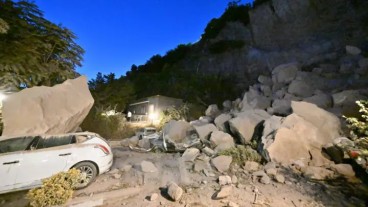
Powerful earthquake near Naples injures 26 and causes widespread disruption
Jul, 31, 2026 | NewsA powerful 4.7-magnitude earthquake struck the area surrounding Naples in southern Italy on Friday e...

7.6 magnitude quake hit Indonesia: tsunami warning lifted
Jan, 10, 2023 | NewsAn earthquake of magnitude 7.6 struck Indonesia (Tanimbar islands) on Tuesday prompting panicked re...
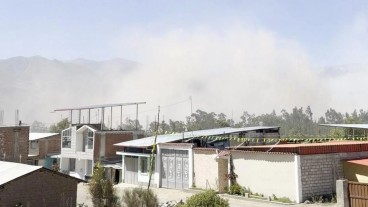
6.7-Magnitude earthquake strikes Southern Peru: Tremors felt across several regions
Aug, 20, 2026 | NewsAt least three people have been injured and buildings damaged after a strong earthquake struck south...

A strong 7.7 magnitude earthquake hits Myanmar: at least 1,700 fatalities and ,3400 injuries
Mar, 28, 2025 | NewsOn Friday, March 28, a powerful 7.7-magnitude earthquake struck Myanmar at 12:50 local time, result...
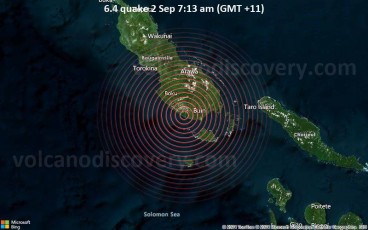
A 6.4 magnitude earthquake struck in Papua New Guinea on Monday morning
Sep, 02, 2024 | NewsA strong (6.4 magnitude) earthquake hit the Bougainville Island in Papua New Guinea at approximatel...
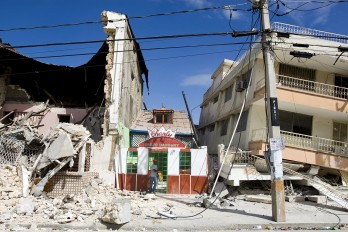
Earthquakes: five deadliest earthquakes ever recorded around the world
Feb, 24, 2022 | NewsEarthquakes are one of the most dangerous natural disasters. More than 100 earthquakes of the magni...
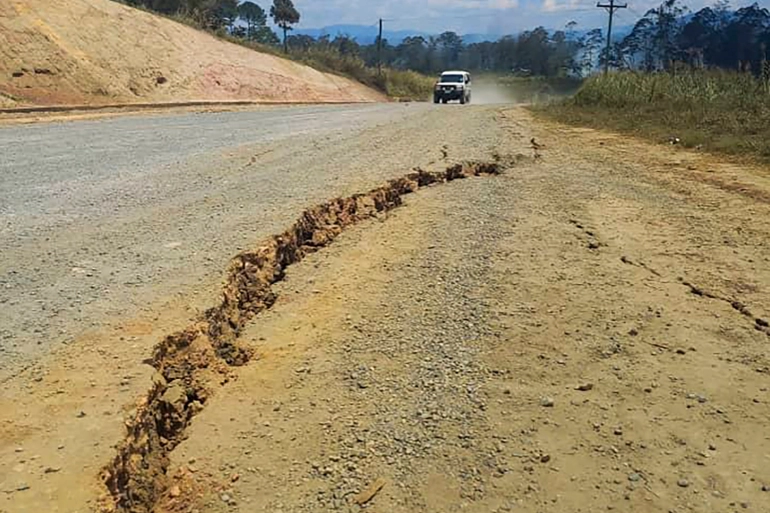
A 7.6-magnitude earthquake shook Papua New Guinea: at least five fatalities
Sep, 11, 2022 | NewsA 7.6-magnitude earthquake shook Papua New Guinea, damaging buildings, triggering landslides and ki...
Trending

Spectacular interchanges around the world
Nine fatalities after building collapses in Western India
7.1-magnitude quake damages historic Kumamoto Castle under restoration

Topology optimization for manufacturable 3D-printed concrete structures

Ten of the world’s most famous concrete structures

Brazil is building Latin America’s longest sea bridge

