
Fehmarnbelt Tunnel, Germany: Completion of structural works at German portal marks a new milestone
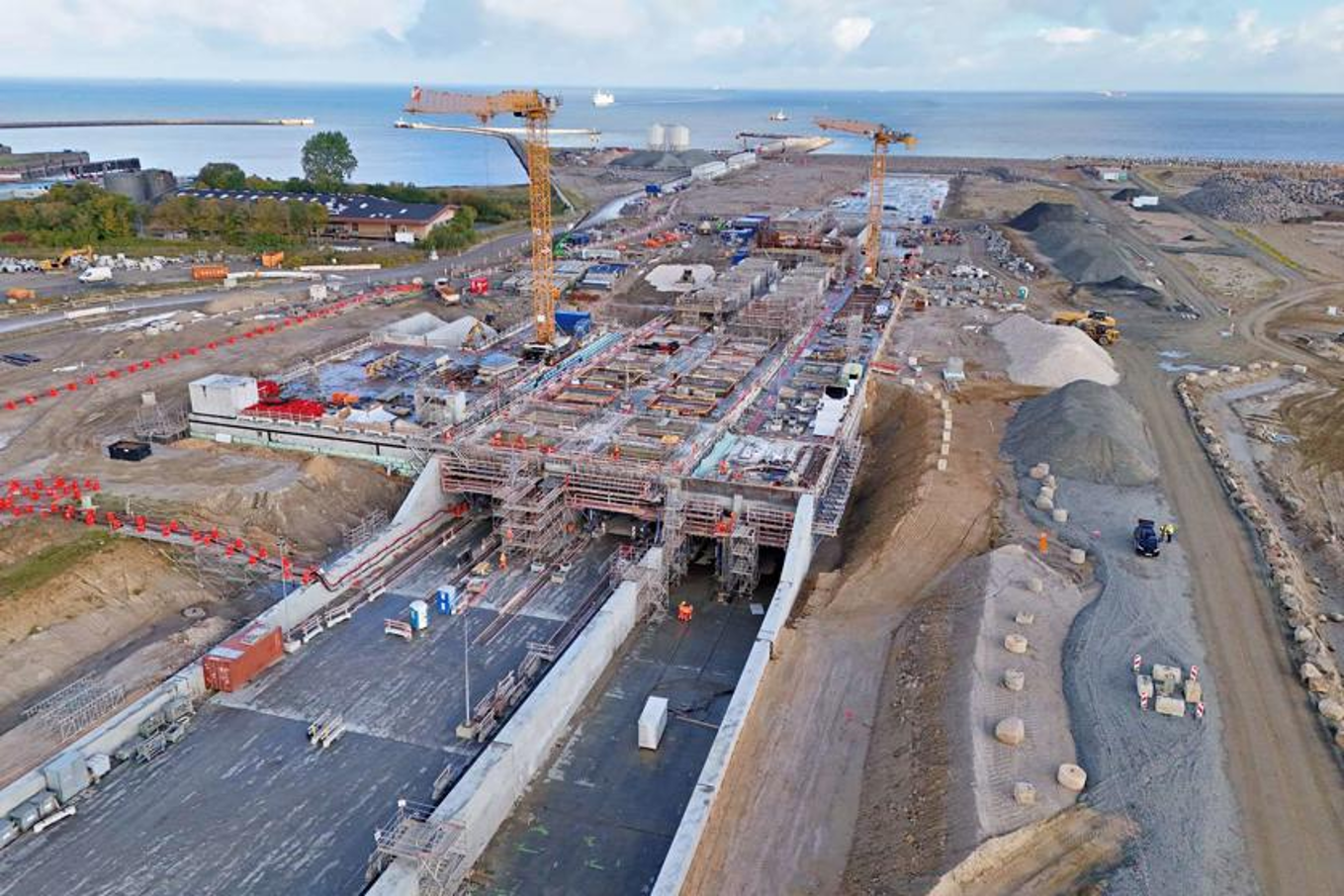
A significant milestone has been reached at the German end of the Fehmarnbelt Tunnel, where structural works on the tunnel portal at Puttgarden are now complete. The portal marks the conclusion of major concrete works on the land-based section of the project, which will provide a direct connection between Germany and Denmark beneath the Fehmarnbelt strait.
Concreting began at the German construction site in autumn 2023, and the final section of the tunnel roof was poured in October 2026. The completed structure comprises a 450-metre cut-and-cover tunnel and a further 150-metre light transition zone, where daylight gives way gradually to tunnel lighting, forming an approximately 600-metre land-based section.
Work on the portal was carried out in segments, with construction teams concreting the base slab of each section first, followed by the side walls and finally the tunnel roof, using conventional construction methods. Alongside the tunnel itself, a portal building has been constructed to house tunnel technical equipment, together with ramps that will carry the road and railway into the tunnel.
Although the main concrete structure is finished, several activities remain under way at the site. Finishing work continues around the openings in the light transition zone, while work inside the tunnel tubes is only now beginning, starting with the installation of fire protection panels on the walls.
Matthias Laubenstein, Contract Director at Sund & Bælt, said it was impressive to see what had been achieved at the German site in just a few years, crediting the work of many people across different trades. Before the first tunnel element can be immersed on the German side and connected to the portal, further elements must first be immersed on the Danish side and the tunnel trench off the German coast prepared.
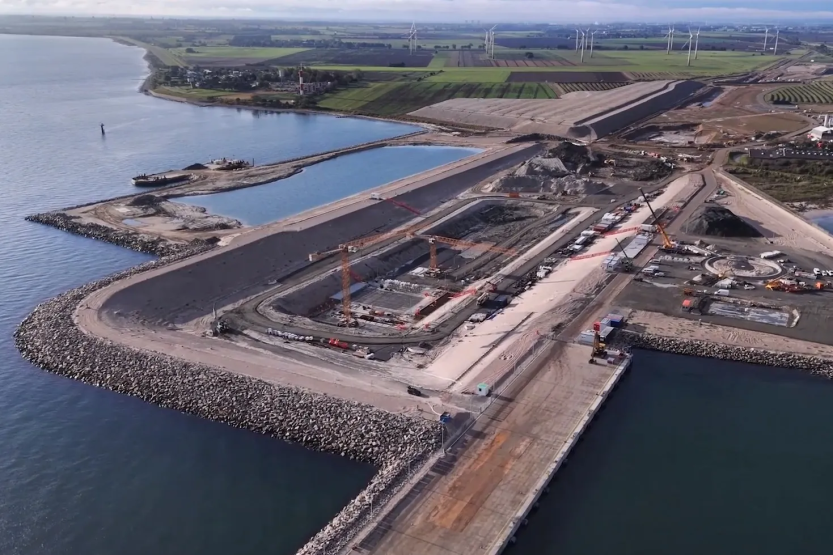
An important step towards completing the structure involved managing the temporary retaining dyke that had long formed the boundary of the construction pit. After the first 100 metres of cut-and-cover tunnel were completed in summer 2024, workers built a new dyke above the finished section and installed bulkheads at the seaward end of the tunnel tubes to make them watertight.
The area between the new dyke and the temporary retaining dyke was then flooded, allowing the retaining dyke to be removed in autumn 2024. The seaward section of the cut-and-cover tunnel is now under water, and this is where the first immersed tunnel element on the German side will be connected.
The project has also relied on maritime transport to supply construction materials. Since July 2023, the Puttgarden work harbour has supported operations at the site, receiving most materials by cargo vessel rather than by lorry across the island of Fehmarn. Concrete was produced locally at an on-site batching plant.
With the concrete work now finished, attention is turning to the remaining installations and preparations needed to connect the land-based section with the immersed tunnel beneath the strait.
Sources: news.europawire.eu, yahoo.com, femern.com, newcivilengineer.com
Want to read more like this story?

The Silvertown Tunnel project is drawing to its end with the completion of the main tunnel
Jun, 03, 2024 | NewsThe construction of the Silvertown Tunnel in the UK is about to be completed, with engineers having...

Complex underground tunnel in Manhattan: The Grand Central–42nd street connection
Oct, 01, 2026 | NewsThe new pedestrian tunnel connecting Grand Central Terminal with the No. 7 subway line at 42nd Stree...

Fehmarn Belt Tunnel: Europe’s groundbreaking gateway beneath the sea
Dec, 05, 2024 | NewsThe world’s longest and deepest underwater tunnel, which will connect Germany and Denmark, is curre...

Fehmarn Belt will be Longest Tunnel in the World
Apr, 24, 2015 | NewsSlated at $10 billion, construction on the Fehmarn Belt Fixed Link could start as early as this year...

The Longest Underwater Tunnel
Jul, 13, 2015 | NewsThe underwater tunnel is a huge project with a cost at around 36 billion US dollars, with a length t...

A unique in-tunnel grouting project by Keller at Merbourne's Metro Tunnel
Jun, 08, 2021 | NewsAfter months of careful design planning and on-site expertise, Keller has successfully completed a...

The proposed LA tunnel system by Elon Musk’s Boring Company has been revealed
Dec, 19, 2017 | NewsElon Musk, frustrated by LA’s heavy traffic, has proposed to create tunnels for an underground trans...

World’s longest immersed road and rail tunnel also features remarkable design solutions
Aug, 29, 2017 | NewsThe Fehmarnbelt fixed link in the Baltic Sea will connect the Danish island of Lolland with Germany'...

The Longest Train Tunnel Has Been Completed
Sep, 02, 2015 | NewsIt is a fact that the 38-mile train tunnel that links Switzerland and Italy has finally been complet...
Trending

Spectacular interchanges around the world

Severe storms and possible tornadoes cause widespread damage across North Carolina
Glass cafe at 2,600 feet in the air: it opens on world's tallest bridge

The Leaning Tower of Pisa: Ingenious design and ongoing stability efforts

Athens, Greece: Building collapsed after explosion

Cairo, Egypt: Building collapse caused 6 casualties while 7 others were injured


LEAVE A COMMENT