
News


News on Research / Academia

Impact of wetting and drying cycles on cement
Scientists shed light on the wetting-drying behavior of cement. The study was recently published in the Proceedings of the National Academy of Sciences. Cement is widely used as a construction mate...
Read More
Polymers that function as heat conductors
Scientists from Massachusetts Institute of Technology (MIT) have introduced a new method of producing conductive polymers. Polymers are materials than are normally used to trap heat while heat cond...
Read More
Seattle buildings are less earthquake-resistant than expected
A new study suggests than many buildings in Seattle cannot withstand large earthquake incidents. The research focuses on the performance of reinforced concrete walls under seismic load and shows th...
Read More
Ancient building material is re-engineered
According to British and French scientists, cob, an ancient building material, can be re-produced with current standards in order to be utilized for structural facilities. Buildings made of c...
Read More
Improving concrete's fire resistance with tire fibers
In a new study, researchers have developed a method to improve concrete's performance when subjected to fire using recycled fibers from tires. The study was conducted by scientists from the Univers...
Read More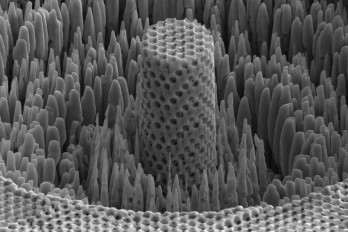
New lightweight material has the strength of titanium
Researchers have developed a sheet of nickel with nanoscale pores that has the strength of titanium but is 4-5 times lighter. The new study was carried out by researchers at the University of Penns...
Read More
New method to evaluate building safety after seismic events
Researchers from EPFL (École Polytechnique Fédérale de Lausanne) in Switzerland have found a bran-new method to determine whether a building is safe after an earthquake. Structures that have withst...
Read More
Turning bio-solids into bricks
A research team at RMIT University in Melbourne, Australia, has found a method to turn bio-solids into sustainable bricks. Bio-solids are nutrient-rich organic materials that derive from domestic s...
Read More
Understanding and manipulating nanolayer composites behavior of Pearlite
Scientists from Kanazawa University in Japan have found a method to increase the ductility of Pearlitic steel. Pearlitic steel or Pearlite is one of the strongest materials capable of bearing heavy...
Read More
High-strength and ductile alloys developed in China
Researchers at the City University of Hong Kong (CityU) have developed an extremely strong but still ductile and flexible multicomponent alloys. The research focuses on high-entropy alloys (HEAs),...
Read More