How Japan’s first two-story 3D-printed home is built for earthquakes
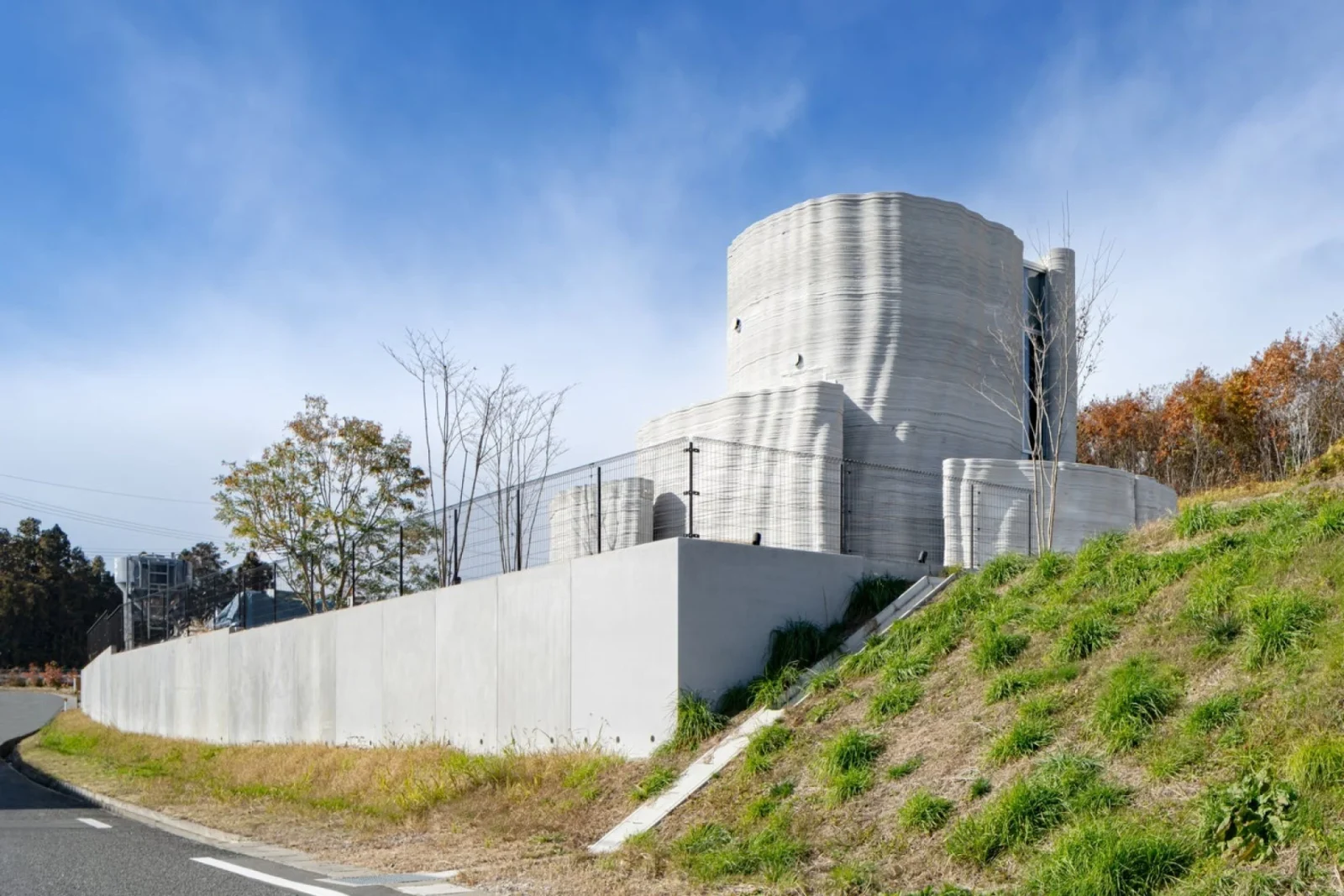
In Miyagi Prefecture, a small two-story home built mostly with 3D-printed concrete has reached an important milestone. Called the O House, this 50-square-meter residence is the first reinforced concrete home in Japan created using 3D construction printing to receive official government approval. It was designed to comply with Japan’s strict earthquake-resistant building standards demonstrating that modern automated concrete printing can now meet the same demanding structural requirements, even in one of the most earthquake-prone regions in the world. It should be mentioned that, traditionally, most low-rise homes in Japan have been made from timber, valued for its long history and flexibility during seismic activity.
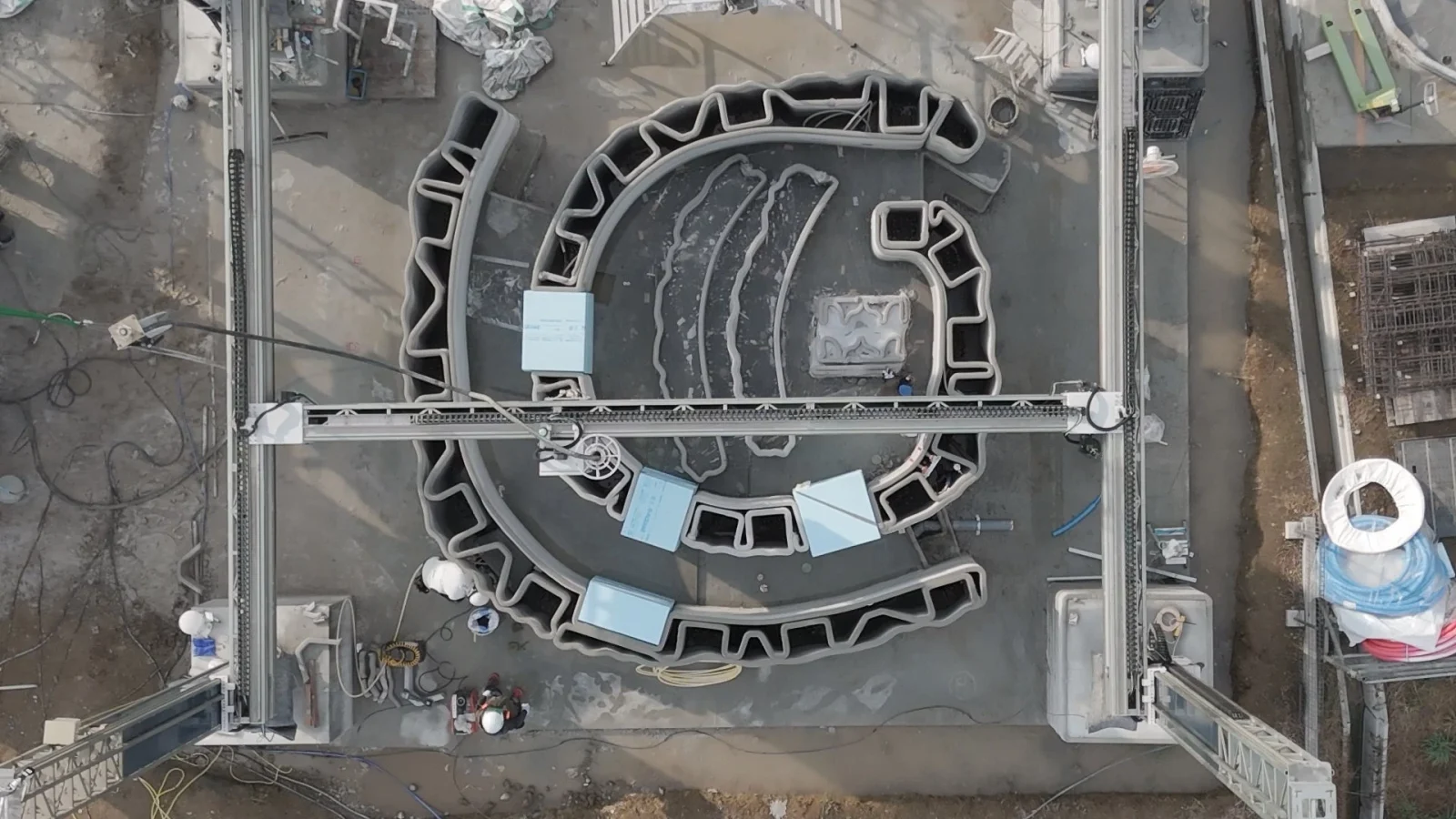
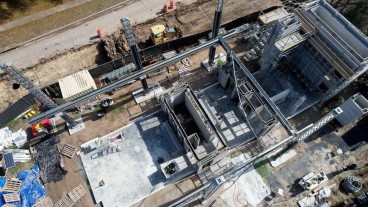
The house was developed by construction technology company Kizuki Co. Ltd., in collaboration with Onocom Co. Ltd., using a customized COBOD 3D printing system. The structure rises from a foundation partially printed half a meter below ground and reaches a total height of seven meters. A small team of four workers operated the printer on-site, working through a range of weather conditions—from cold winter temperatures to summer heat—while depositing approximately 39 cubic meters of concrete in continuous layers.
The O House combines 3D printing with traditional reinforced concrete construction. While the walls, floor, and roof slabs were printed, a reinforced concrete frame provides the main structural support. This hybrid method allows for greater design flexibility while ensuring the strength and stability needed to meet Japan’s rigorous seismic safety standards.
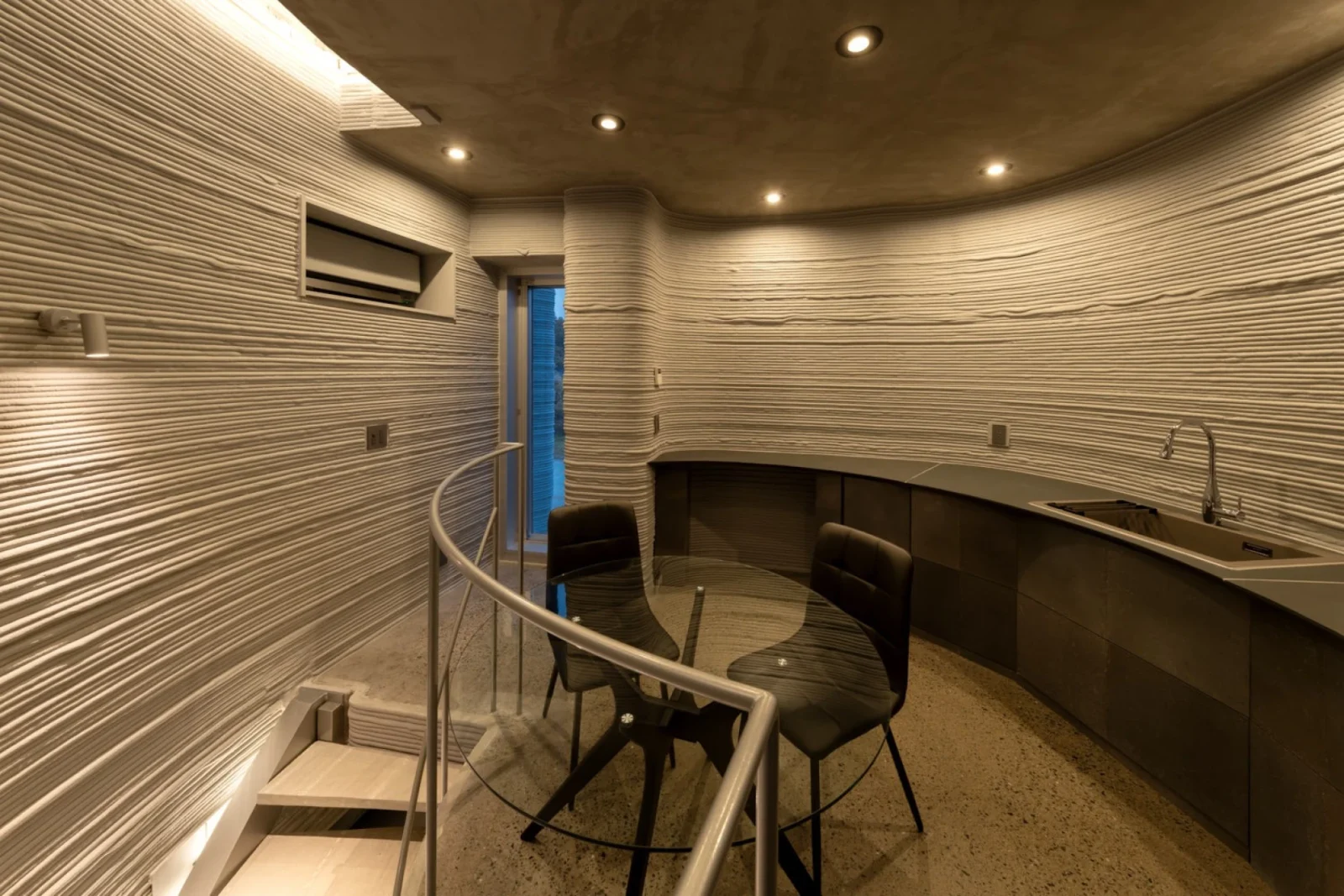
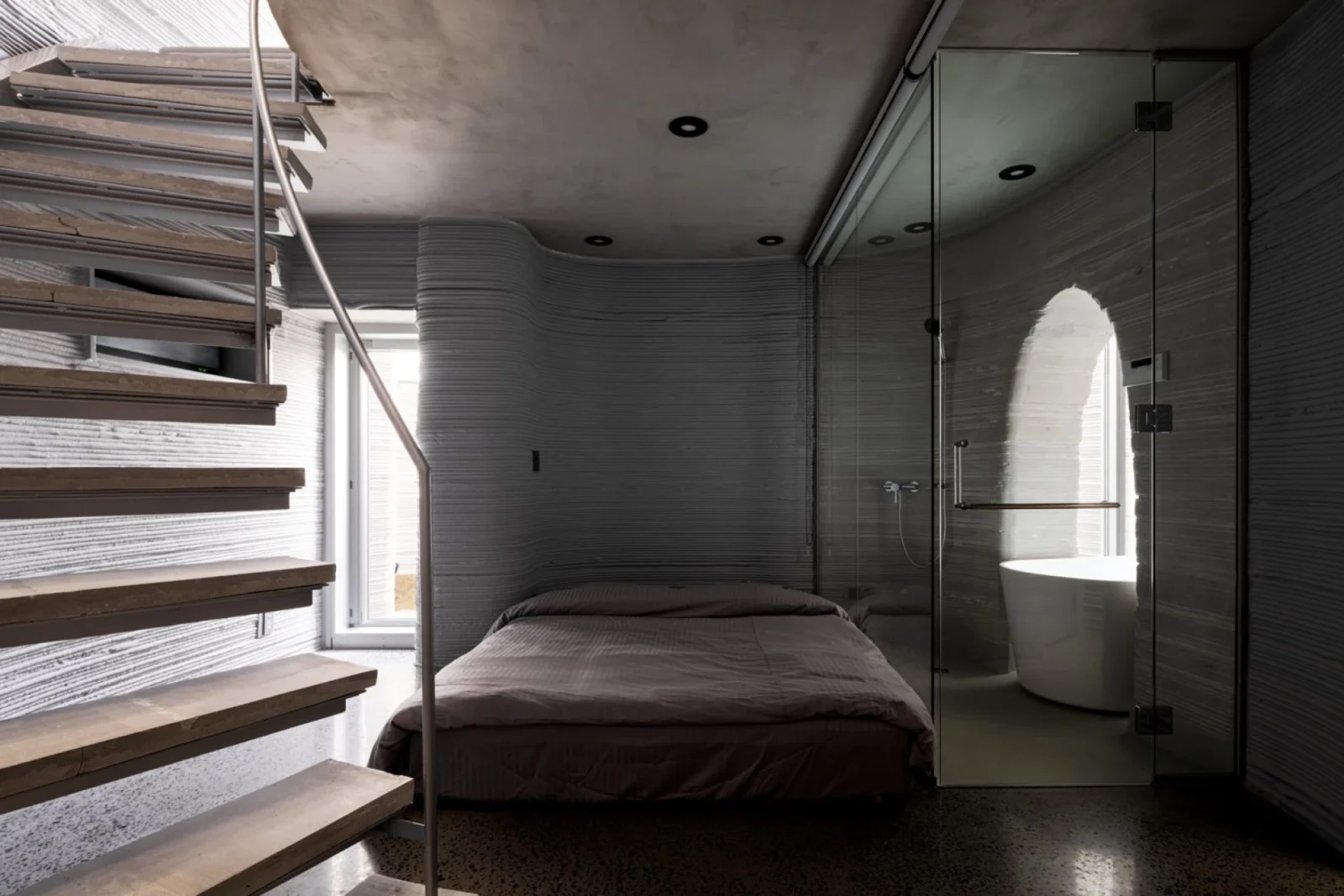
In addition, the design of the home is inspired by the natural shapes of caves. Its curved walls and arches highlight one of the key advantages of 3D printing: the ability to create smooth, continuous forms without the need for conventional molds or formwork. These curves continue throughout the interior, shaping spaces such as the ground-floor master bedroom with its private bathroom, and an open upper level that combines the kitchen, dining, and living areas. Skylights were added to bring natural light into areas where traditional windows would have been difficult to install.
Interestingly, the home’s layout places the main living areas on the upper floor, while more private spaces are located downstairs. Custom-made curved cabinetry and interior finishes were carefully designed to match the printed structure, creating a cohesive relationship between the building’s form and its functions, something that would be much harder to achieve using conventional construction methods.
Gaining approval under Japan’s strict building regulations is no small achievement. Authorities carefully assess how materials and structures perform under earthquake stress, which is a constant concern in the country. By successfully meeting these requirements, the O House proves that 3D-printed concrete homes can deliver both innovation and real-world structural reliability.
The significance of this project extends beyond a single house. As Japan’s first government-approved two-story 3D-printed concrete home designed to withstand earthquakes, it sets an important precedent for the future of construction in seismic regions. It shows that this technology could become a practical alternative to traditional building methods, especially for infrastructure, emergency housing, and areas facing labor shortages. The teams behind the O House are already exploring broader uses for this approach, recognizing its potential to improve resilience, speed up construction, and reduce dependence on manual labor.
Sources: parametric-architecture.com, newatlas.com, interestingengineering.com
Image Gallery
Want to read more like this story?

The world’s most exceptional 3D printed homes
Apr, 10, 2024 | News3D printing technology is a revolution at the construction sector, enabling builders to fabricate h...

Dubai plans to build the world's first 3D-printed mosque
May, 03, 2023 | NewsDubai aspires to build the world's first 3D-printed mosque, that will cover an area of 2,000 square...

Printout homes using new techniques: the rise of 3D-printed houses
Aug, 18, 2021 | NewsPalari Homes and Mighty Buildings company is using a new technique to build houses within 24 hours....
The first 3-D-printed, two-story home is under construction in U.S.
Jan, 12, 2023 | NewsA 3D printer is taking home building to a new level. The enormous printer weighing more than 12 ton...

Japan: The first railway 3D-printed building constructed within 2 hours
Jul, 22, 2025 | NewsOn Tuesday, July 22, the first 3D-printed train station building was constructed at Hatsushima Stat...

Melbourne: the first 3D-printed house in southern hemisphere
Jan, 18, 2022 | NewsThe first ever 3D-printed house in the southern hemisphere has been built in a Melbourne manufactur...

A 3d-printed house to withstand strong earthquakes was built in 26 hours
Oct, 25, 2023 | NewsA team in Guatemala used 3D printing technology to construct an earthquake-proof house within a rem...

World’s largest 3D printed building in Florida completed
Jun, 20, 2023 | NewsPrinted Farms, renowned for constructing Florida's initial authorized 3D printed house in Tallahass...

New solution promises 90% cost reduction in concrete 3D printing materials
Dec, 22, 2021 | NewsConcrete 3D printing of building shells has grown considerably in the last few years, with more and...
Trending


4.1 magnitude earthquake in Nice, France raises concerns among authorities

The tallest structure in Indiana: 1,132 feet tall

The first building in Toronto, Canada to exceed 100 storeys.

Sinkholes Found Near Lotte World Tower

Aman brings signature luxury to Singapore's first supertall skyscraper

World Bank estimates Venezuela's earthquake losses at $19.6 Billion