
China: Researchers conducted study using AI to predict future earthquakes

A new research was conducted in China to explore new ways to use artificial intelligence in earthquake research, with scientists hoping the technology will help them better assess seismic threats and provide earlier warnings about potential risks.
According to Meng who is the leader of the earthquake forecasting department at the China Earthquake Networks Center , a new AI system is already being tested in a research zone covering areas of Sichuan and Yunnan. Rather than relying on a single source of information, the technology examines historical earthquake activity, seismic signals and measurements from different monitoring networks to identify patterns and estimate possible risks.
While the approach could make earthquake assessments more effective, Meng warned against treating artificial intelligence as a solution to one of seismology's most difficult problems.
It should be noted that predicting earthquakes involves far more than identifying areas where seismic activity is common. Specifically, scientists is required to predict the exact location, time and strength of an earthquake before it actually happens which is something that existing methods cannot consistently achieve.
In addition, another challenge that scientists must overcome is that geological conditions differ considerably from one region to another and a system that performs well in one area may produce less reliable results elsewhere, particularly where monitoring records are limited. Therefore, researchers suggest that AI is not quite ready to predict exactly when or where the next major earthquake will occur.
However, AI-assisted analysis could be used to predict the aftermath of major seismic events, when uncertainty about aftershocks can complicate rescue operations and decisions about returning home.
Moreover, Meng mentioned the earthquake that struck Dingri County in Xizang on January 7, 2025, as an example of the demanding work involved in monitoring seismic conditions after a disaster. She stated that her team spent more than a month tracking developments and regularly reviewing the available data after the 6.8 magnitude earthquake. Also, she added that their efforts involved over 700 hours of work and resulted in more than 100 reports examining changes in seismic activity.
Lessons from that response helped researchers refine their assessment methods. Some of those improvements were subsequently put into practice following another major earthquake in Xizang this year.
Overall, she stated that even as artificial intelligence becomes more widely used in earthquake science, uncertainty remains unavoidable. The goal, she suggested, is not to promise predictions that science cannot deliver, but rather to ensure that the information provided to authorities and communities is more useful when it matters most.
Sources: chinadaily.com.cn, ief.ac.cn
Want to read more like this story?

University of Alaska Fairbanks: They developed an algorithm that can predict earthquakes
Sep, 02, 2024 | NewsThe University of Alaska Fairbanks (UAF) published revolutionary research in Nature Communications...

Messina earthquake (1908): a civil engineering landmark
May, 26, 2023 | EducationThe 1908 Messina earthquake, also known as the Great Reggio earthquake, is considered as one of t...
Earthquake Engineering
Jan, 01, 2019 | EducationEarthquake engineering is a critical field of civil engineering that focuses on the analysis, desi...

5.8-magnitude earthquake strikes Ecuador coast: damaged buildings, huge loss of property, no tsunami
Mar, 28, 2022 | NewsA huge loss of property was suffered when an earthquake of magnitude 5.8 struck Ecuador coast on Sa...

Can scientists predict a strong earthquake months before the event?
Nov, 29, 2023 | NewsSeismologists have revealed a study proposing the prediction of strong earthquakes by identifying e...

Iran: 425 earthquakes struck in one month
Mar, 13, 2024 | NewsAccording to the seismological networks of the Institute of Geophysics at the University of Tehran,...

The first earthquake risk model for the whole of Europe shows the cities and regions most threatened by disaster
Apr, 28, 2022 | NewsScientists have created the first earthquake risk model for Europe which will form the basis for mi...
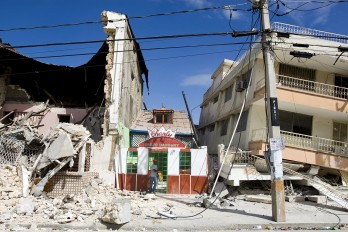
Earthquakes: five deadliest earthquakes ever recorded around the world
Feb, 24, 2022 | NewsEarthquakes are one of the most dangerous natural disasters. More than 100 earthquakes of the magni...

Greece and Italy: an earthquake early warning system could save lives
Feb, 08, 2022 | NewsA public earthquake early warning system in Greece and Italy could give people vital seconds’ notic...
Trending

Spectacular interchanges around the world

Severe storms and possible tornadoes cause widespread damage across North Carolina
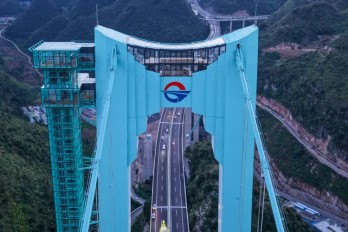
Glass cafe at 2,600 feet in the air: it opens on world's tallest bridge

The Leaning Tower of Pisa: Ingenious design and ongoing stability efforts

Athens, Greece: Building collapsed after explosion

Cairo, Egypt: Building collapse caused 6 casualties while 7 others were injured


LEAVE A COMMENT